Brief History of Travel & Tourism

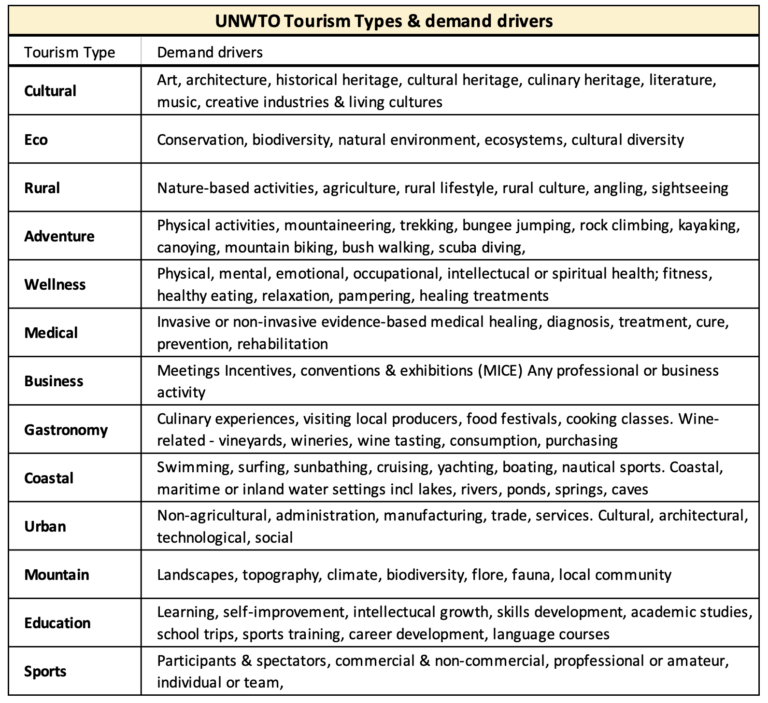
 Intro & types of Tourism

Ancient Egypt

Other ancient cultures

16th-19th C

19th Century Boom

20th Century Mass Tourism

21st Century trends

Case Study : History Australian Tourism


Invaluable information was researched in the following publications


John Richardson : A History of Australian Travel & Tourism

O’Gorman, The Origins of Hospitality and Tourism 

Towner, An Historical Geography of Recreation and Tourism in the Western World 1540-1940 

Withey, Grand Tours and Cooks’ Tours,


Refer Bibliography 

for full details


 Intro & types of tourism


Tourism can be defined as the  the activities of visitors travelling to 

& staying overnight in places outside of their usual environment for at least a day 

and for any purpose other than employment [ABS]


It has been a fundamental human activity across all ancient and 

modern cultures and societies for thousands of years and continues today as 

“the greatest continuing mass movement of peoples in human history” [Richardson]


The industry is one of the largest & fastest growing (following the Covid epidemic) with

Global Market size U$ 8.6 trillion

[US$ 9.2 trillion in 2019 before Covid]

330 million employees (10.3% of global)


 Ancient Egypt 


One of the earliest forms of tourism was trade between Egypt and the Mediterranean 

evident from  as early as 4000 BC with caravan routes & ships dealing in a vast range of products


Lapis Lazuli from Kush & Bactria 

Cedar & corn from Lebanon & Byblos

Ivory, ostrich feathers & leopard skins from Africa

Gold from Nubia

Turquoise, agate & carnelian from Persia & Arabia

Incense, myrrh & fragrant woods from Punt

Copper & tin from Anatolia

Pottery & building materials from Canaan

Obsidian from Ethiopia

Chickens from India

Silk from China

Vegetable oils, paints & cosmetics from Iran & Afghanistan

Sulphur from Syria

Pearls from the Red Sea

Egypt was also the major specialist exporter to other countries which 

would have required accommodation for Egyptian exporters 


Grains

Papyrus

Linen

Dates

Weapons

Jewelry

Mirrors

Stone Artifacts


Other forms of travel & Tourism included

[Baines & Malek; Shafer; Riggs; Giddy; Tyldesley]


Religious & pilgrimage 

To sacred sites (Abydos, Karnak, and Philae)

Opet Festival in Thebes


Heritage & Monument Tourism

Pyramids & royal tombhs

as evidenced by graffiti


Leisure Tourism for elites

Nile Cruises

Oases Resorts

Nile Delta fishing


Educational & Cultural

Scribes & Scholarly officials

Foreign curiosity (eg Herodotus)


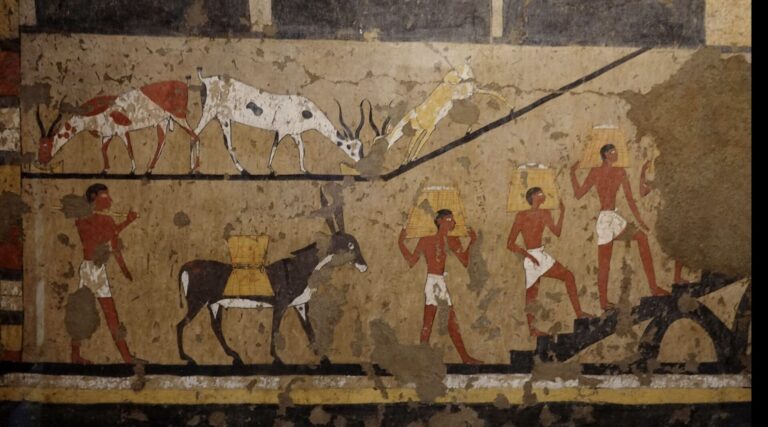
Ancient Egyptian Trade 2000 BCE

 Other Ancient cultures


The ancient Greek Olympics festival attracted thousands of spectators and competitors who spent 

2-3 weeks getting there with many attending a month-long pre-games training camp, and others 

visiting for cultural activities.[Crowther] Romans travelled extensively for festivals made possible by 

obligatory general holidays accounting for more than half the year.  [Sigaux]  


Tourism as religious pilgrimage has been practiced by Chinese visiting Mount Taishan for over 3000 years, 

which evolved from the 2nd C BC into an official imperial ceremony attended by 71 Emperors. [ICOMOS]


The great age of pilgrimage to Rome, Spain, Palestine & Jerusalem started in the 10th C  [Sigaux] 

and monastic orders including the Franciscans from the early 13th century provided hospitality 

for travellers, whilst travel for study increased as secular literacy improved [O’Gorman] 


The Book of Marco Polo about his trips between Venice & Peking along the silk road 

from 1256, was one of  tthe first to describe Tibet, India, Sri Lanka, 

Burma, Japan,  Indo-China & Java to Europeans [Richardson]


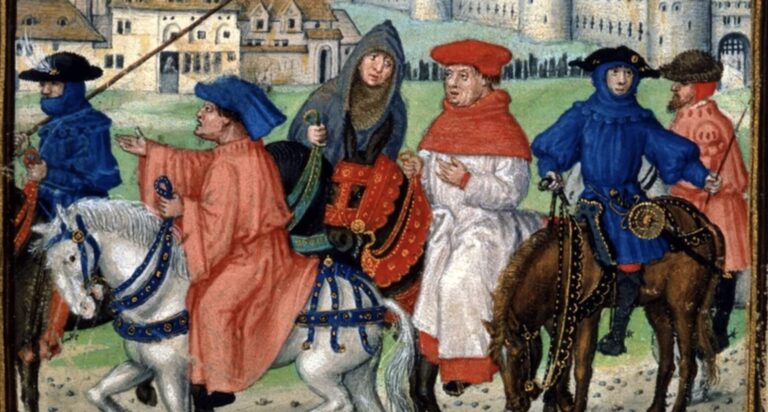
Medieval PIlgrimage 14th C

 16th – 19th Centuries


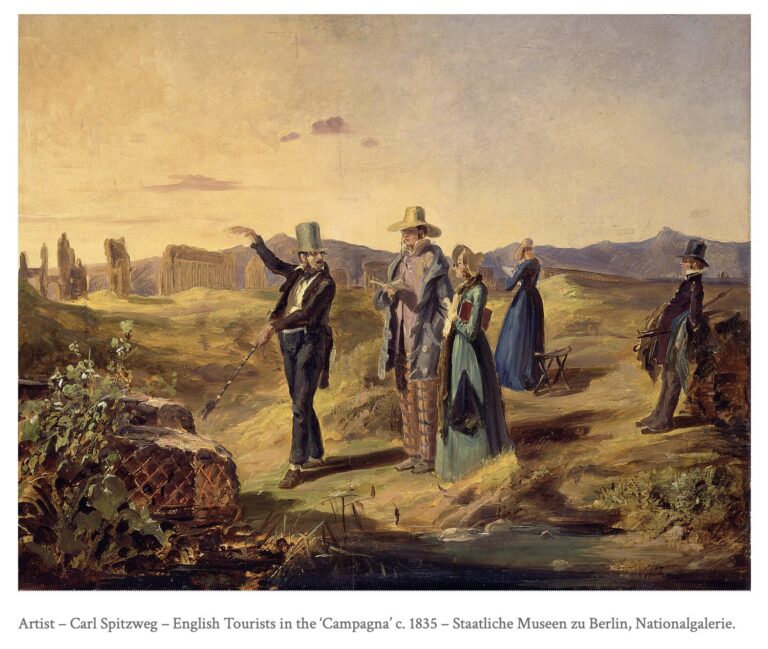
From the 16th century, travel in Europe for religious conviction gradually evolved 

into travel for secular curiosity [Towner] 


Travel for pleasure in Britain increased [Moir] and the Grand Tour emerged involving a 2-3 years circuit of 
western Europe by wealthy young aristocrats seeking culture, education, health & pleasure. 


The classics, antiquities, fashionable society, art & architecture 
were the main areas of interest for the Grand Tourists.


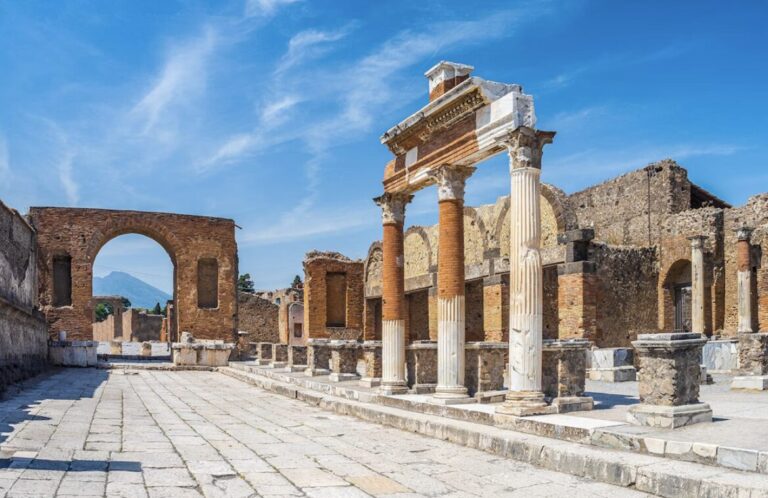
The discoveries at Herculaneum in 1738 & Pompeii in 1748 attracted many new tourists [Towner] 

 Travel culture was a response to the intellectual movement of humanism, the philosophy of the enlightenment 
and a scientific quest for knowledge [Towner] but was also seen as education [Parks] 
to enhance a government career or to benefit health [Towner]
 
 Napoleon and his brothers pioneered public art galleries and museums during the early 19th century with 
the opening of the Louvre Paris, Rijksmuseum Amsterdam and the Prado Madrid  [Withey] 
which are all now a vital part of tourism in their countries. 
Pompeii Forum

 19th Century Boom


In America, domestic travel for pleasure boomed in the 1820’s & 1830s when the first railways & road 
turnpikes were being built and by the 1840s, the USA had twice as much railways track as all of Europe. 

The “Fashionable Tour” emerged as the USA equivalent of the European Grand Tour which included NY, 
Albany, Catskill Mountains, Saratoga Springs, Niagara Falls, Boston/New England, Philadelphia, 
Baltimore & Washington [Withey] The first transcontinental train service in the USA was opened in 1872, 
followed by the Trans-Andean railway between Chile & Argentina and the Trans-Siberian railway 
from Moscow reached Vladivostok in 1902 [Sigaux]

Countryside retreats & riverfront leisure proved popular, as did cycling escapes & golfing holidays, especially 
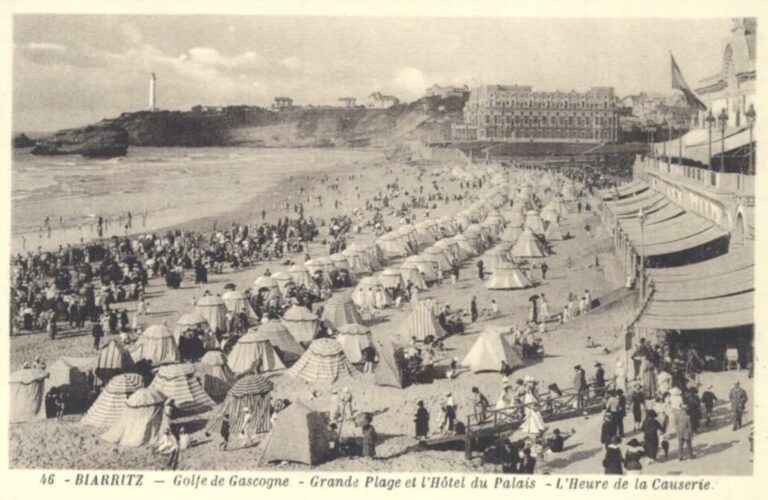
for the middle classes [Towner] Seaside resorts emerged with the “launch” of Biarritz in 1845, [Sigaux]  
and winter tourism resorts such as St Moritz were popular from the 1850s [Withey]

Temporary visits to the countryside increased based in part on the Arts & Crafts movement of William Morris 
and picturesque rural towns such as in the Cotswolds were “re-discovered” from the 1880s.[Marsh in Towner]

Thomas Cook pioneered organized tourism and group travel in 1845 by linking the railway, steamship & hotels.[Sigaux] 
He organised excursions to the great exhibitions of London (1851), Dublin (1853) and Paris (1855,1867 & 1878) [Sigaux] 
tours to the Middle East in 1869, Scandinavia in 1875, and to India and the USA during the 1880s.[Withey]


Biarritz 19th C

 20th Century Mass Tourism


The 40 years leading up to WW1 was a period of peace & political stability in Europe, which witnessed 
economic growth, prosperity, shorter working hours, introduction of paid holiday leave, 
a network of railways linking most of Europe, of tourism activities attracted 
commercial interests & government attention [Towner]


The advent of affordable transport by rail, sea & air during the 20th C produced 

spectacular growth in travel  which became an explosion of “mass” tourism demand 

after WW2 as peace, prosperity & the expansion of  global trade fostered more disposable income. 

The advent of affordable air travel and the extraordinary economic growth  

of China, India, South Korea and other Asian countries in the 

late 20th and early 21st C led to the continued strong growth of tourism globally.

 
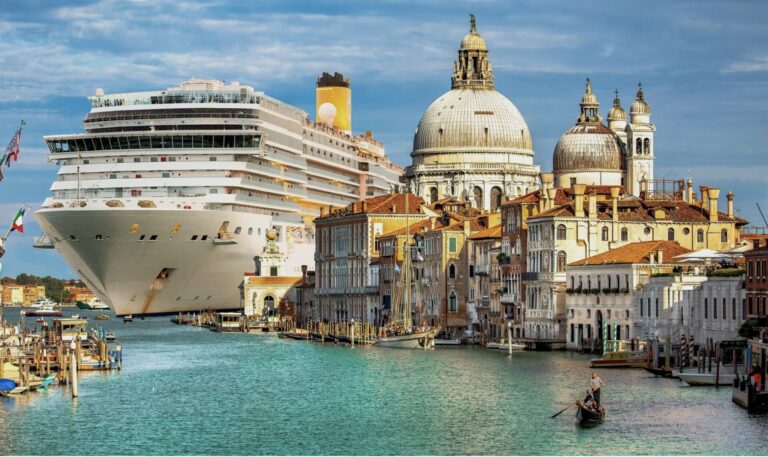
Mass-tourism Venice

 21st Century Trends


The 21st C has witnessed a series of events with profound impacts on the world, 

although Tourism has remained remarkably resilient .


Sept 11 2001 in NYC, the Global Financial Crisis (GFC) in 2008, and 

the Covid Pandemic from 2020, all slowed global travel considerably.

But by 2025, the travel industry had largely returned to pre-covid levels.


Many popular destinations have reacted negatively to “over-tourism”

as evidenced by Venice restricting or banning large crush ships 

like the one in the photo above….


The aspirations of many tourists have changed dramatically over the 

last 25 years, with travelers prioritising   – 


Authenticity

Privacy

Experiences

Sustainability

Exclusivity

Meaning

Uniqueness

Value


We believe that Accommodari helps to satisfy 

these objectives 


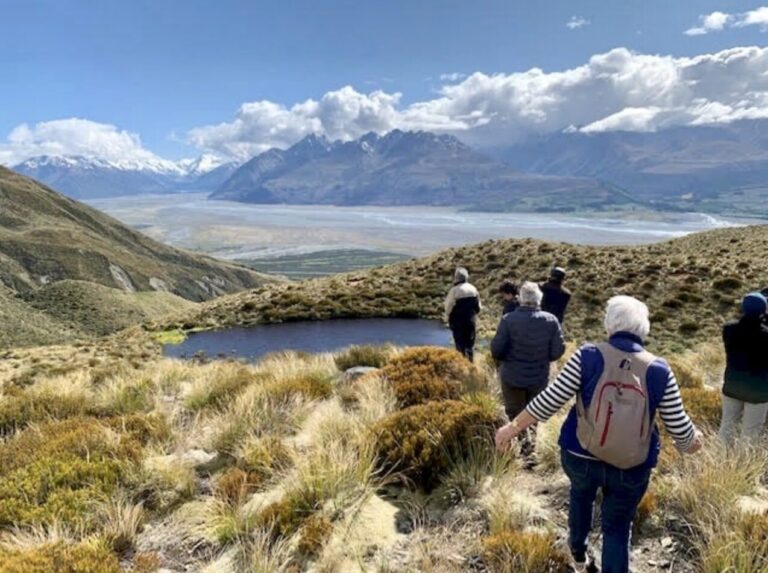
Boutique Experiential Tourism

 Case Study : History Australian Tourism

Part 1 : Colonial & Early


Trade & government dealings between Sydney & other early colonies were the first forms of tourism, 

following thefoundation of Hobart (1803), Albany WA (1826), Swan River Colony (1829) and Melbourne (1835). 


During the 1820s & 30s convicts built a network of “great roads” from Sydney which made travel manageable, 

and the first regular mail coach service between Sydney & Melbourne started via Berrima in 1838 [Richardson] 


“Prospecting” tourism emerged in Australia with the discovery of gold in Victoria in 1851 which boosted 

commercial trade with Sydney.[Richardson] P&O first came to Australia in 1852 after securing the mail contract 

from Singapore [Davidson & Spearritt] whilst Cobb & Co started their coach services in 1853. [Richardson] 


1855 saw the first steam-locomotive service in NSW and by 1868 TSN had 8 steam ships 

serving Sydney, Melbourne, Hobart, Launceston & the Snowy River goldfields [Richardson]

 “Scenic” tourism started when the Great Western Railway reached Mt Victoria 

in 1868 and the Blue Mountains were opened up. [Davidson and Spearritt]


Sydney mirrored Europe & America with major international exhibitions in 1879-80 which attracted

1.1 m visitors and in the same year Australia’s first National Park south of Sydney was declared 

(2nd only in the world next to Yellowstone), although conservation attitudes were so weak that 

grazing, mining & quarrying were allowed [Davidson & Spearritt] 


The centenary of the First Fleet’s arrival in 1888 attracted many country & inter-colonial visitors to 

Sydney, and Sydney’s Royal Easter Show which started in 1889 was also a great attraction. 

Australia was part of the international transport revolution, with the Melbourne to Adelaide rail line 

completed in 1887, and the Sydney to Brisbane line in 1889 [Richardson]


 During the 1890s, “mountain” tourism was preferred over the seaside, which benefitted the 
Blue Mountains & Jenolan Caves close to Sydney [Richardson] Thomas Cook 
started world tours to Australia & NZ in 1898. [Withey] 


In the early 20th C, harbourside baths & beach tourism became popular in Sydney when Manly and Bondi 
beaches established surf clubs. Cars were rapidly growing in popularity and motoring organisations 
such as the Sydney Automobile Club (1903) were created. [Richardson]  Sydney’s famous Taronga Park Zoo 
was established in 1916 [State Library of NSW] which became a major tourist attraction.


Qantas was formed in 1922 as one of 2 companies to have a mail contract with the Government but with 

little passenger traffic until the 1930s. British Royal visits in 1921 & 1927 attracted patriotic crowds 

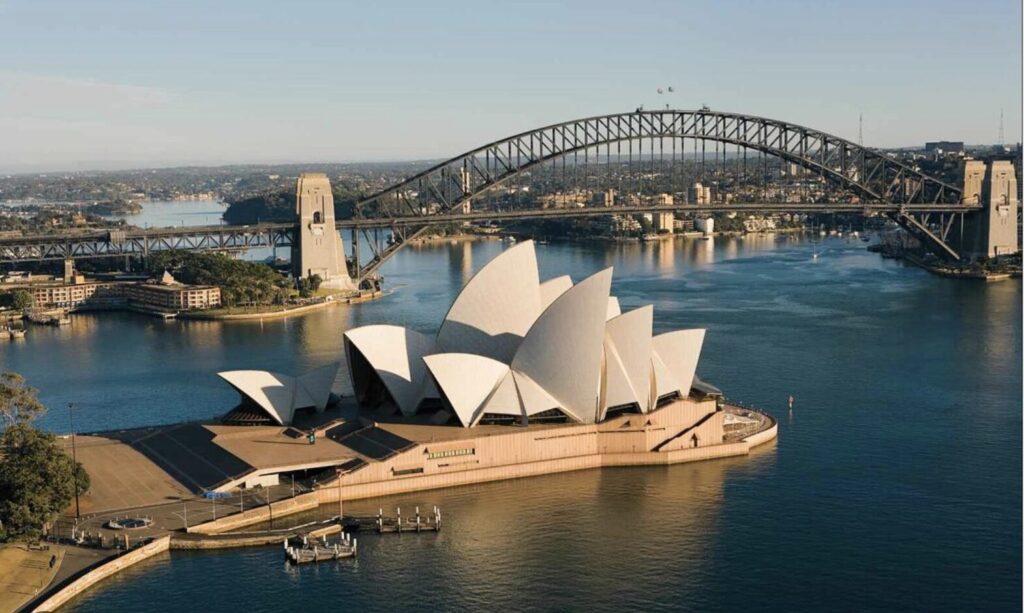
of locals & tourists. The Sydney Harbour Bridge opened in 1932, and immediately became 

a Sydney icon, but did not become a real tourist attraction in its own right until 

Paul Cave created Bridge Climb in 1998. [Richardson] 


Sydney’s Luna Park opened in 1935,  and in 1938, Sydney had both the Sesquicentennial 

(celebrating 150 years since the first fleet) and the British Empire Games [Davidson & Spearritt] 

During the 1930s, Sydney’s ocean surf beaches such as Coogee & Bondi 

started to overtake harbor resorts in popularity. [Richardson]


 Case Study : History Australian Tourism

Part 2 : Post WW2


In 1946, the Australian Commonwealth Government set up Trans Australia Airlines (TAA) and 

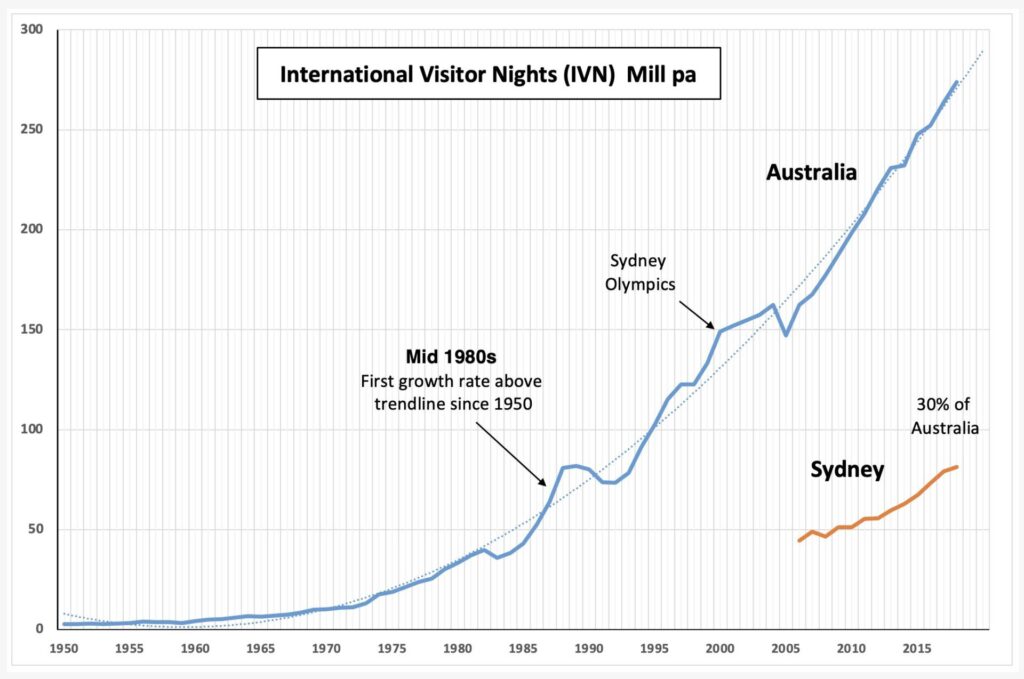
Qantas was operating a weekly service from London by 1947. From 1950 until 1971, 

there were more International arrivals than Australian departures. 


In 1952, the federal government dictated that domestic mail & government business were to be 

shared equally between 2 airlines [Richardson] which effectively subsidized domestic tourist travel. 

Queen Elizabeth II’s 1954 tour of Australia [Wishart] and the 1956 Melbourne Olympic Games [Reeves] 

boosted domestic tourism and international awareness. 


1964 was the first year to have more than 100,000 International visitors which more than 

doubled within 5 years.  The Sydney to Melbourne rail-line gauge was finally standardised in 1962, with 

Sydney to Perth in 1969   [Davidson & Spearritt]  which made travel quicker & more convenient. 


During the 1960s, conventions were recognized as a high-yielding part of the tourism industry and 

in response, the Sydney Convention & Visitors Bureau was formed in 1969. [Richardson] 


The 18th & 19th C buildings of the Rocks were saved from wholesale demolition in the 1960s & 70s 

by the combined efforts of the National Trust and the BLF’s Green bans and 

today are a priceless part of Sydney’s heritage & tourism scene.  [Davidson & Spearritt] 


The Festival of Sydney started in 1977 which has been an enduring tourism legacy.  [Davidson & Spearritt]  

There were less International arrivals than Australian departures between 1972-1987 with a consequential

negative balance of trade. [Richardson] During the 1970s, an increasing awareness and 

appreciation of heritage led to recreations of heritage towns such as Old Sydney Town 

from 1975 whilst many existing heritage towns such as Berrima were being revitalized. 


Following a modest start in 1978, Sydney’s Gay & Lesbian Mardi Gras had 

become a major event by the early 1980s  [Davidson & Spearritt]


Richardson notes that the 1980s were

“… a watershed for Australian travel and tourism… [when] international tourism became big business 

in the second half of the decade… accompanied by unprecedented investment in hotels and resorts …. 

[which] raised as never before the public consciousness of tourism as an economic engine” [Richardson]


The 1980s witnessed the increased global awareness of the environment, sustainability & cultural authenticity, 

which created a more sophisticated and demanding marketplace of tourists who preferred more individual 

& authentic experiences and led to the rise of eco, nature and indigenous tourism. [Davidson & Spearritt] 


Sydney also experienced the fluctuating fortunes of tourism during the late 1980s, with the 1988 Bicentennial

celebrations and the opening of Darling Harbour, followed by the crippling 9-month airline pilots dispute 

from Aug 1989. The airlines industry continued its transformation with 

the end of the “two airline policy” in 1990 [Richardson]


In 1994 the Australian Stock Exchange (ASX) introduced the Tourism & Leisure Index which attracted

strong investor interest, and in 1996 there were 3 major floats of tourism assets on the ASX.

 However, by 1998, institutional investors were again suffering after the Asian financial crash 

impacted tourism & hotel business. [Richardson]


Sydney was announced as the winner of the 2000 Olympics in 1993 and in the lead up to the millennium event, 

the Royal Easter Show was moved to the new Olympic site at Homebush, and the old showgrounds site 

was developed as Fox Studios, all further expanding Sydney’s tourism attractions. 


In 1997, the NSW Government introduced the Accommodation Levy Act, as a revenue generating source 

commonly known as the Sydney bed tax leading up to the Olympics which imposed a 10% surcharge 

on room rates for hotels, motels, serviced apartments and B&B. 

This however prompted rearrangement of itineraries which resulted in less time spent in the city [Richardson]


Ihalanayake contends that tourism tax increases can “cause a considerable reduction in international tourism

consumption both in the short-term and long-term….. which led to substantial output contractions in 

tourism-related sectors … [and] can have broader, negative economy-wide effects in the short-term such as 

reductions in real GDP and aggregate employment”. [Ihalanayake]


The 2000 Sydney Olympics were the biggest event ever held in Australia with 199 countries and almost 

11,000 athletes participating. Australia had 4.93 million inbound tourists during 2000 

which was a 10.6% increase from the previous year. [CBoC&S]  


The euphoria of the Olympics was followed by slower growth of tourists for 5 years due partly to 

global anxieties after 11th Sept 2001 (911). The “Asian Tsunami” of 2004 likely enhanced Australia’s attractiveness, 

due to some source markets like Japan & Korea being less likely to visit affected parts of Asia [Kondraschow[


Since 2005 and despite the Global Financial Crisis (GFC) of 2008 and the Covid epidemic of the 2020s,

Australia’s tourism has performed strongly due largely to extraordinary growth in visitors from China,

and also Australia’s reputation as a safe, peaceful and attractive destination.


Innovative events such as the Vivid festival and Opera on Sydney Harbour 

have continued to add to the appeal of Sydney city as a global destination.