
Visitor Accommodation
Introduction
Ancient Travelers & Accommodation types
Ancient Egypt & Mediterranean
Ancient Greece
Ancient Rome & Pompeii
Medieval World & Silk Road
Bath England
18th C Europe & Grand Tour Era
19th C Industrial & Transport Revolutions
USA
1. Public Houses – Up to 1815
2. Palaces of the People – 1815-1840
3. Expansion & Diversification – 1840-1876
4. Golden Age & Hotel Empires – 1876-1914
5. World Wars & Inter-wars – 1914-1945
1920s-1940s
Hotel Innovations & 1sts
21st C
Case Study : Sydney Australia
1. Colonial to 19th C
2. 20th C & beyond
Many invaluable publications were studied during
research for this History including
Firebaugh
Williamson
O’Gorman
Maskell
Richardson
Refer Bibliography
for full details
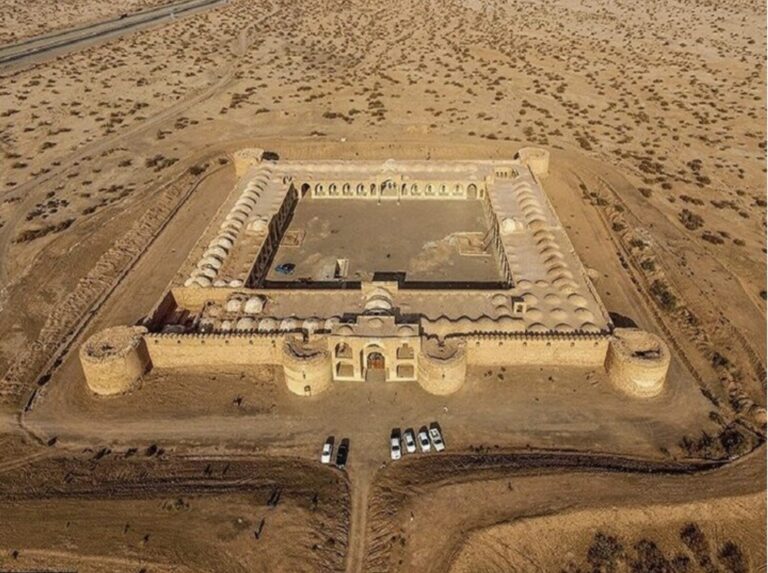
Introduction
Visitor Accommodation serves Travel & Tourism which is
one of the worlds most significant & fastest-growing industries
Visitor Accommodation has an approx worldwide value of
$880 Billion and employs over 11 million people [ChatGPT]
This history focuses on Visitor Accommodation generally
and custom-designed accommodation specifically
Also refer
Adapted Accommodation
The key types of contemporary visitor accommodation
all of which are featured in Accommodari –
Hotels
Motels
Hostels
Resorts
Serviced Apartments
Serviced Residences
Pubs [with rooms]
Bed & Breakfast [B&B]
Self-service [eg AirBnB]
Timeshare
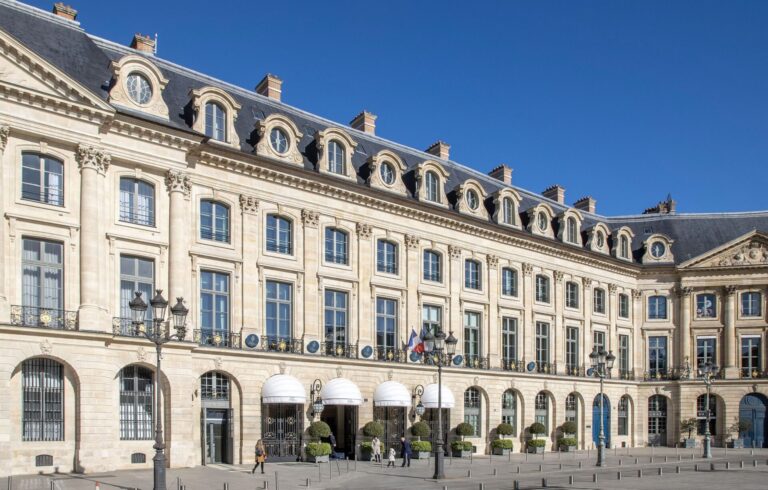
Ancient Travelers & Accommodation types
Visitor Accommodation goes back to Ancient Egypt,
catering to all types of travelers –
Royalty
Priests
Scribes
Officials
Pilgrims
Merchants
Soldiers
Couriers
Tradesmen
Explorers
Tourists
Commercial accommodation was not practiced until about 1100 BCE, as free
Hospitality was considered a cultural & religious obligation [Firebaugh]
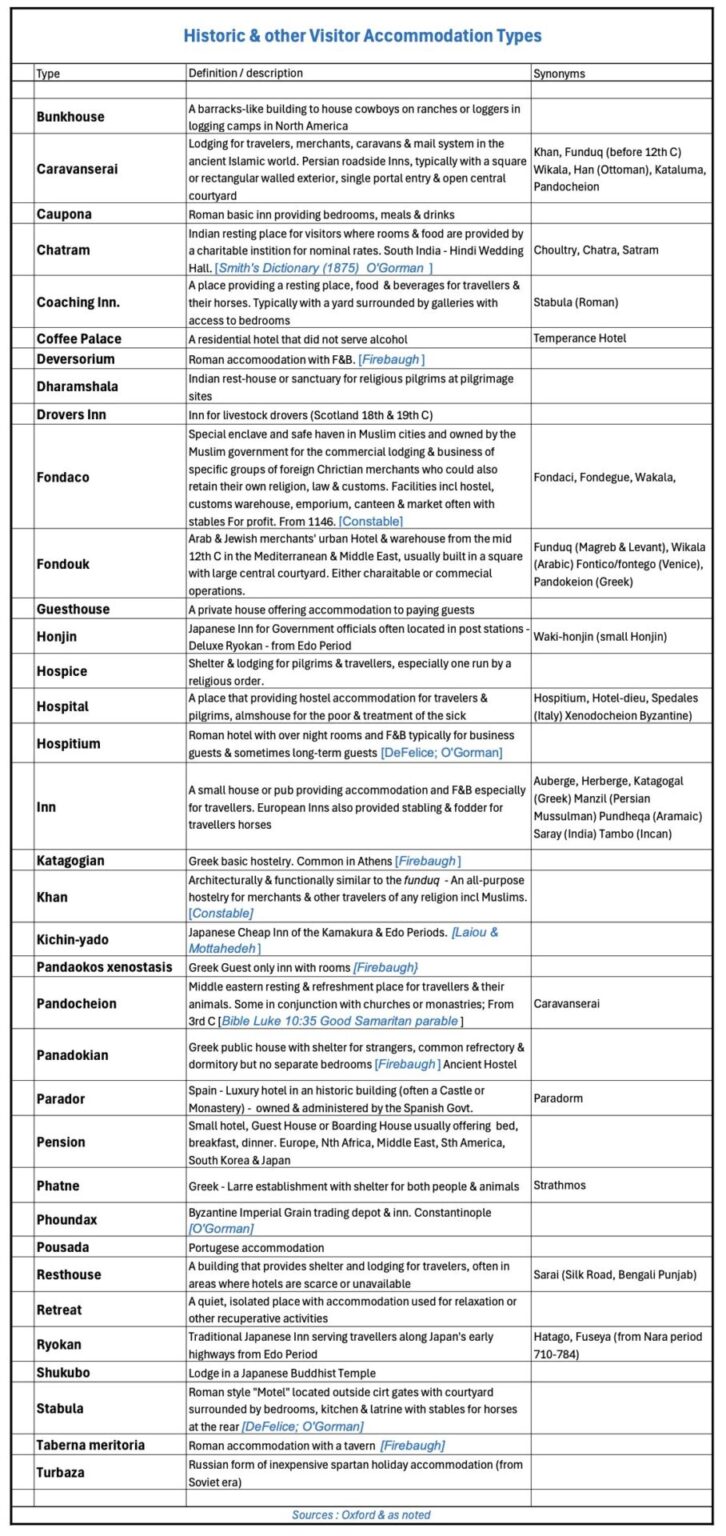
Each Empire, culture or region had different types, configurations
& terminology for their visitor accommodation –
Persian Khans or Caravanserais
Ottoman Han
Byzantine Phoundax
Roman Hospitia or Stabula
Christian Fondaco
Arabic Fondouk
Jewish Fund
Indian Chatram or Dharamshala
Greek Pandokeion
Japanese Ryokan or Honjin
Spanish Parador
Portugese Pousada
Russian Turbaza
Incan Tambo
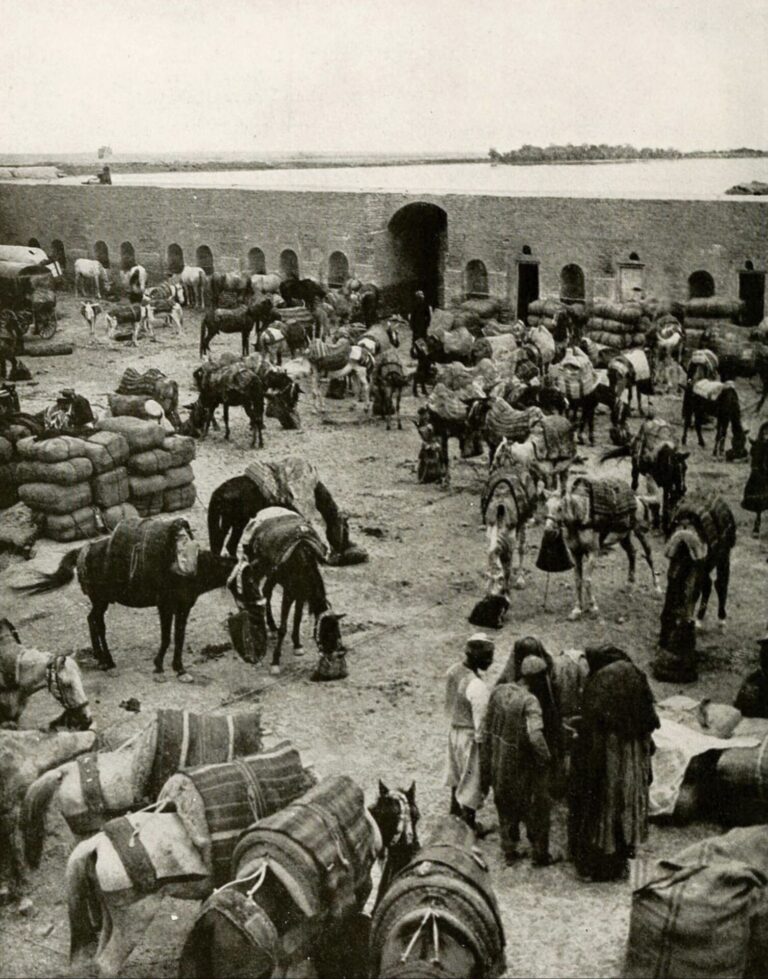
Ancient Egypt & Mediterranean trade
Ancient Egypt valued products from all over the Mediterranean world.
Merchants & suppliers needed accommodation to trade
Lapis Lazuli from Kush & Bactria
Cedar & corn from Lebanon & Byblos
Ivory, ostrich feathers & leopard skins from Africa
Gold from Nubia
Turquoise, agate & carnelian from Persia & Arabia
Incense, myrrh & fragrant woods from Punt
Copper & tin from Anatolia
Pottery & building materials from Canaan
Egypt was also the major specialist exporter to other countries which
would have required accommodation for Egyptian exporters
There is evidence for many types of visitor accommodation including
[Sidebotham; Kemp; O’Connor; Casson]
Caravanserai-type Rest Houses
Fortified Mansiones along trade routes
such as at Wadi Hammamat
Temple Guest Houses
“Per-hesy” or “sekhet” for pilgrims or officials
as evidenced by graffiti or votive stelae at Abydos
Hostels at Karnak / Luxor managed by priests
Official Lodgings
Workers villages (Deir el-Medina) hosted scribes & inspectors
Guest quarters for foreign envoys (eg at palaces in Tell el-Amarna)
Nile-based accommodation
House boats for elites with cabins
Greek & Roman period inns
Papyri at Karanis (Fayum) mention guesthouses
Pandocheions
Reciprocal Hospitality
Elephantine papyri describe letters re hosting friends
Greek & other Ancient Empires
Ancient Greece, Etruria, Mesopotamia were also
trading all over the known world
Trading along the Silk Road started from 2nd C BCE
Hostels & Inns existed in Mesopotamia (modern-day Iraq & Kuwait)
from 2000 BCE. [O’Gorman]
The Sumerian ruler Shulgi of Ur also built inns
along his new road system around 2000 BCE [Mark]
Herodotus claimed that the Lydians (7th-1st C BCE) were
the first to establish commercial inns & Taverns [Firebaugh]
as they are credited with the invention of money [Wiiliamson]
The Ancient Greek Olympics attracted thousands of spectators & competitors
who spent 2-3 weeks getting there with many
attending a month-long pre-games training camp &
others attending cultural, social & religious activities.
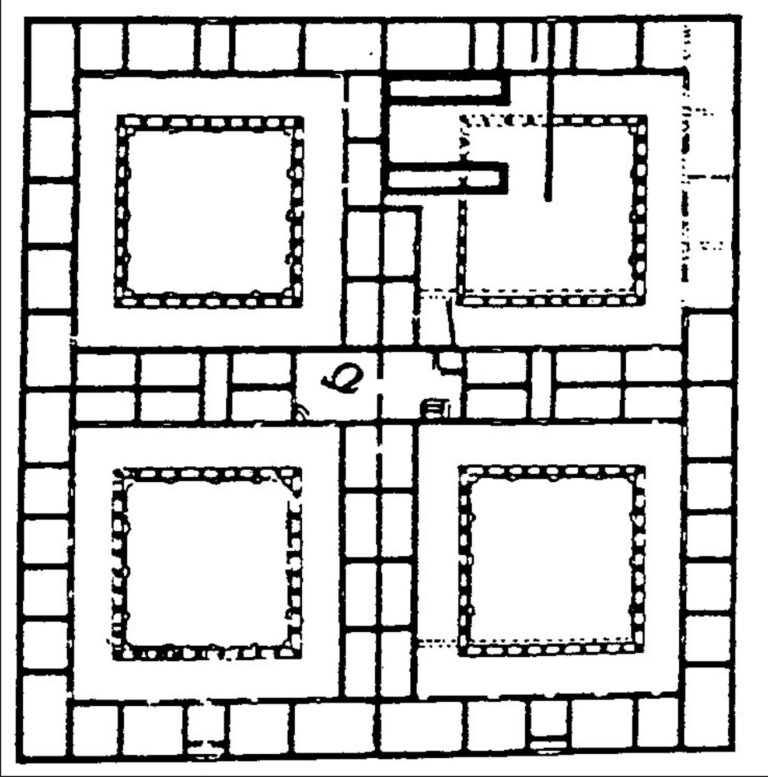
Thucydides in the 5th C BCE talks about an inn (katagogion) of 200′ (61m) square
with rooms all around above & below [O’Gorman]
Xenophon in the 4th C BCE recommends more inns be built for
ship owners, merchants & visitors to Athens [O’Gorman]
Stephanus noted 111 caravanserai between The Persian Capital & the sea.
Aelian mentions the magnificent caravanserais throughout the Persian Empire
“They must have been exceedingly sumptuous” [Firebaugh]
During the Byzantine Empire, the post system reached its zenith, with
magnificent military roads & a hostelry at every station where
travelers could lodge & couriers could get fresh horses [Firebaugh]
Most resting places had stabling for horses, storage for chariots or carts
plus food & drinks for both guests & horses ….
Fortified post & signalling stations with accommodation protected
traders, messengers, couriers, officials & soldiers.
The Greek pandocheion was a ubiquitous form of accommodation
in the Mediterranean world for 2 millennia [Constable]
Rome & Pompeii
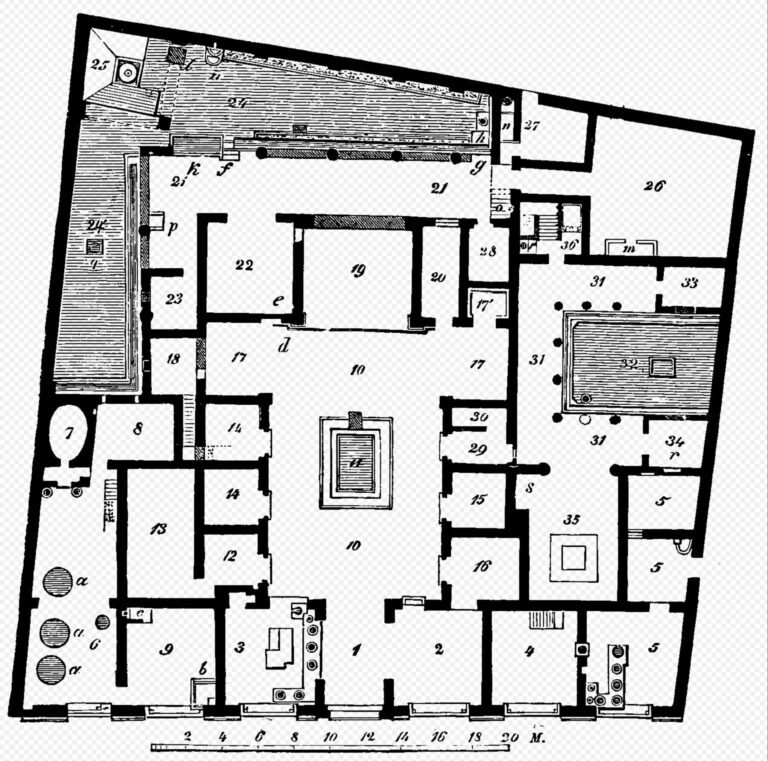
There were inns & taverns in Rome, but they were not used by
patricians, foreign ambassadors or free Roman citizens
who were the majority of visitors [FIrebaugh]
Rome & Pompeii had 3 categories of commercial accommodation
[DeFelice; O’Gorman] –
Hospitium (Hotel)
Stabula (Motel)
Caupona. (Inn)
Deversorium (Roadside Inn)
Most hospitia & stabulae had a Taverna (Shop with F&B), Thermopolium
(“Snack bar”) or Popinae (“Take-away” F&B) adjoining [DeFelice]
The Caupona of Lucius Velutius Placidus in Pompeii
was a Thermopolium with rooms attached
There were also State-managed establishments called Mansiones
for officials & couriers on the cursus publicus (Imperial Post) routes
Pompeii had over 40 accommodation establishments with rooms and F&B [DeFelice]
with one hospitium containing over 50 rooms with a secluded garden
& a 10 room Grand Lupanasr (Brothel) next door [O’Gorman]
Some large Hospitia had [DeFelice]
dining rooms
outdoor dining (triclinium)
numerous bedrooms,
sophisticated kitchen
courtyard atrium
Multi-function room (tablina)
Reception room (oeci)
The Roman Empire developed a postal road network modelled on the Persian
system [Firebaugh] This Cursus Publicus is replicated in the medieval
Peutinger Map (world’s first road map) which shows over 4,000 cities in
the Roman Empire and beyond to India, Sri Lanka & the near East,
with distances between settlements and indications of rest stops [BBC News]
These rest stops or Post-House stations were like great imperial inns providing
food & accommodation for military troops & other travelers, as well as
rations, fresh horses & pack animals [Firebaugh]
The distance between these public houses was calculated to suit the end
of a typical days journey on horseback [Firebaugh]
Travelling Emperors accompanied by many official, secretaries & slaves stayed at
these post-house mansions which Lanciani describes as having [Firebaugh]
Hospice
Temple
Stables
watering troughs
store houses
fuel & provisions
Stone buildings
LImestone roofs
Elaborate flues to heat bedrooms
Projecting eaves in Swiss style
During the Roman Republic (509-27 BCE) envoys stayed at basic inns &
during the time of Polybius (200-118 BCE) there were many inns [Firebaugh]
Plautus in the 2nd C BCE references many inns & taverns in Rome including
deversoria (Rooms with F&B) or taberna meritoria (rooms & tavern [Firebaugh]
With the spread of Christianity, barbarian invasions &
the demise of commerce, inns declined.
The first Christian church in Rome was on the site of a former inn !
Medieval World & the Silk Road
The austerity of the Christians les to the dstruc ion of many Roman inns during
the early Middle Ages, except at seaports & centres of trade [Firebaugh]
Hospitality for travellers was increasingly provided by monasteries & religious
refrectories until the rise of the guilds in the 10th & 11th C [Firebaugh]
The medieval monasteries encouraged travel as hey maintained roads
& bridges for pilgrimage routes [Maskell]
Monasteries had guesthouse accommodation within abbey grounds [O’Gorman]
One 8th C monastery had separate accommodation for rich & poor [O’Gorman]
The SILK ROAD is one of the world’s best know trading routes which lasted from the
2nd C BCE for 1500 years, and extended from the ancient Chinese capital of Xian
to Istanbul via Iran, with accommodation for pilgrims & others initially provided as
charitable hospitality in caravanserais (“building for the caravans”) but which evolved into
commercial centres for merchants [O’Gorman] normally outside city walls or within
fortifications & garrisons nearby for security [Thareani-Sussely]
Some have argued that caravanserais were established as early as the 3rd C [O’Gorman]
and existed throughout the Hellenistic-Roman and Malik-Ottoman eras when they served as
poll stations for collecting taxes & admin off roads [Thareani-Sussely]
Caravanserais were built by the Governors of Egypt in the 9th C
in Uzbekistan during the 9th & 10th C
and 3000 in Western Iran during the 11th C [O’Gorman]
Caravanserais had 2 architectural forms – square or rectangular – with one gate only
& typically having perimeter rooms sometimes over 2 storeys, a central courtyard
for animals, facilities for food preparation, consumption & water supply.
Ownership was by a Central Authority, the community or private [Thareani-Sussely]
Volney describes typical rooms in caravanserai as 3m x 1.5m and having
“four walls, some scorpions & a mat” [Thareani-Sussely]
The Crusades in the near east from the 11th C increased the presence of
western merchants in Egypt, Syria & the Crusader States and different
accommodation evolved incl the funduq & fondaco [Constable]
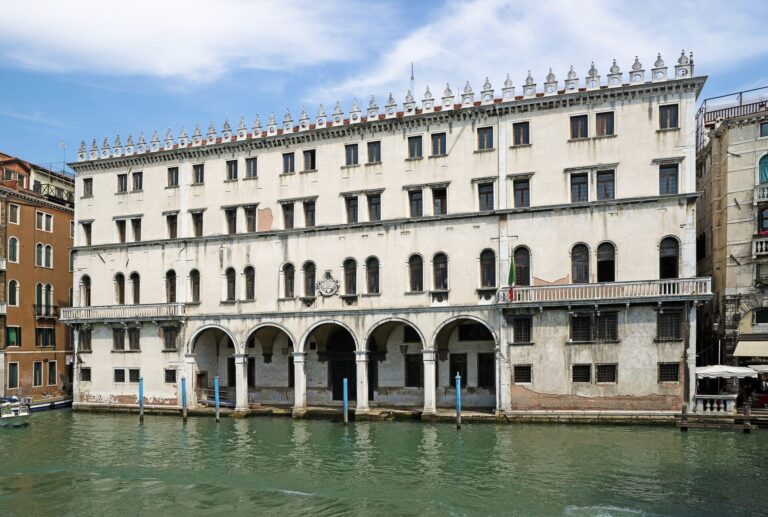
Venetian merchants in Alexandria would use a fondaco which suited the
Muslim authorities as strangers were contained & goods assessed for taxation.
Each significant western trading city has a dedicated fondaco in Egypt by the 13th C
which survived to the Ottoman conquest of Egypt in early 18th Century [Constable]
Major fondaci in Venice [Celetti]
Fondaco dei Turchi (Turks)
Fondaco dei Tedeschi (Germans)
Fondaco degli Arabi
Fondaco dei Persiani (Persions)
Fondaco dei Lucchesi (Lucchese)
Fondaco dei Banchieri e dei Mercanti (Bankers)
The khan was an all-purpose hostelry for travellers of any religion and was
common in the central & eastern Muslim world [Constable]
The late medieval khans were in response were in response to the revival
of Muslim commerce & the postal system in 1260 [Constable] and gradually
took over the funduq during the 12th & 13th C to better meet the needs of Muslim
travellers. A network of new khans was built along the caravan routes of Egypt, Syria,
Iraq & southern Anatolia in the late 12th C, most typically on the city outskirts [Constable]
Old funduqs in the cities were being converted to residences, shops, warehouses & workshops.
The Gough map of the 14th C is the oldest map of Great Britain and is likely designed by
secular cartographers for regular travellers of the day such as merchants, pilgrims, lawyers
soldiers, members of religious orders, royal couriers & commissioners [Millea] The map shows
564 towns & cities many of which were key stopping-points on major medieval roads most
of which would have had inns or hostelries. [Harrison]
Southwark had a concentration of inns as it lead to the London Bridge which was the only
causeway over the Thames for diplomats of traders from the continent. The Tabard built in 1304
is undoubtedly the most famous of the Southwark inns and is immortalised as the starting point for
pilgrims in Chaucer’s Canterbury Tales. Similarly there was a concentration of inns in Bishopgate
as it was through Bishop’s Gate that the farmers of the eastern counties entered the city [Shelley]
Royal Manor Houses in England which had provided free hospitality, developed into commercial hostelries
so that many of the earliest inns retained the sign of the Crown such as the Crown at Rochester which was
halfway between London & Canterbury [Maskell] Other inn names & signs were associated with a
trade Guild, group or entity [Maskell; Richardson] –
Boars Head – Weavers
Three Kings – Mercers
Golden Ball – Silk Merchants
Unicorn – Chemists
Sugar Loaf – Grocers
Golden Fleece – Drapers
Woolpack – Wool industry
Chequers – Money Lenders
Bell or Mitre – The Church
3 compasses – Masons
Rainbow – Dyers
Crispin – Shoemakers
Mitre, dove & wedge – Carpenters
Bulls Head – Butchers
Feathers – Prince of Wales.
A huge diversity of unique names for inns are also associated with aspects of normal life
such as [Maskell; Richardson] –
Nags Head – Horse
Fleece, Woolpack – Country Life
Hunted Stag – Sport
Safe Harbour – Nautical
Sow & Pigs – Farmyard
Acorn – Trees & flowers
The Wagon – Coaching
The Trumpet – Musical instruments
The Shuttles – Industry
The 3 Chronies – Friendship
The 3 cranes in the Vintry is explained by being the place where Bordeaux wine merchants
craned their goods from the riverbank in Elizabethan times [Shelley]
Signs were often one of the most distinctive architectural elements of the building, such as
extravagantly-carved wooden sign at the White Hart in Norfolk [Richardson]
Many of the Kings Head Inns were adapted accommodation being converted monastic
houses following Henry VIII’s independence from Rome [Richardson]
Most early inns outside the towns were very basic common dormitories [Richardson]
Beds were often not more than a basic mattress over a box of straw
with the only other room furniture a chair & chest [Maskell]
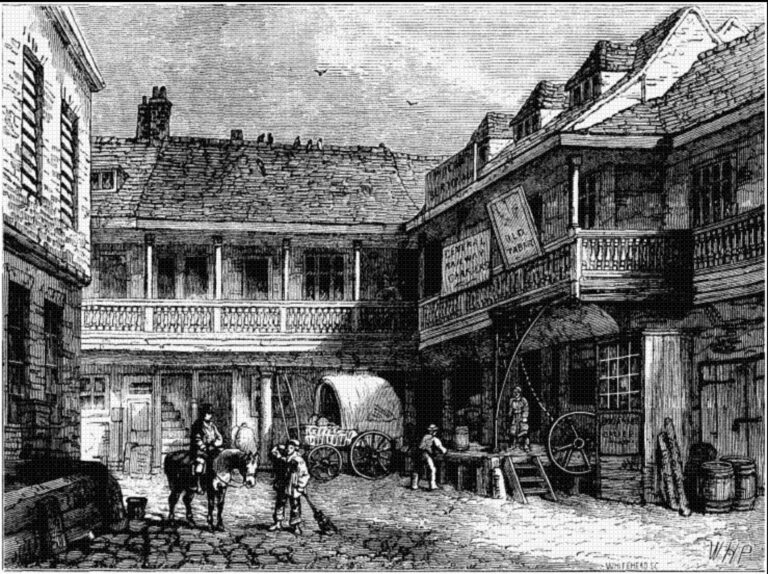
Many old inns had yards for coaches & wagons with 2 or 3 stories of galleried bedrooms.
considered by some as the forerunner of the Elizabethan theatre [Maskell; Richardson]
Many inns provided for things other than accommodation , such as having a large loft area where
bales of wool were stored for the annual fair, or the George at Buckden which had an enormous
kitchen for coach visitors travelling between London and& York [Maskell; Richardson]
After the death of Edward II in 1327, the New Inn had to be built to cater for pilgrims
to his tomb at Gloucester. Dover had inns for those travelling overseas [Maskell]
A pilgrimage was the only excuse for many labourers to get a holiday [Maskell]
14th C English inns changed from depending on noble or monastic patronage to depending on
merchants & traders as feudal society declined and market towns emerged based largely
on the wool trade which, together with factories such as cloth weaving, iron-founding &
brick making, boosted demand for accommodation [Maskell]
15th C inns started to be built on a stately scale [Richardson]
Renaissance Europe & Tudor England
The Protestant Reformation & the dissolution of the monasteries in the 1530s effectively ended charitable
monastic hospitality. The emergence of the modern & secular nation-state with the related expansion in
trade & finance, lead to the rise of commercial hospitality in Europe [O’Gorman]
The centralisation of the monarchy & a general spirit of enquiry were also the catalysts for
the development of facilities for travellers in France [Sigaux]
It was during the Tudor period in England (1485-1603) that there was an astonishing increase in the
number & social importance of Inns. By 1577, there were 132 Inns in Middlesex alone,
whilst by 1637, there were 686 inns within 30 miles of London [Richardson]
The Tudor Inn was similar to a medieval inn but on a larger scale – “Central gateway … giving access to
a galleried courtyard with a 2nd yard beyond form stabling & wagons and generally another rear exit ….
in case of congestions …, Private bedrooms, dark wainscoted chambers with heavy carved-oak movables ….
& by the time of Elizabeth a posting system for the hire if horses”. [Richardson]
The Tabard at Southwark was one of he larger Tudor Inns – ” Large ground floor room facing the street called the
Darke Parlour ….hall &reception room called the Parlour which was used for meals & had vaulted cellars under.
On the 1st floor above the parlour & the hall were 3 rooms, the Middle Chamber , the corner Chamber & a 3rd with
garrets or cock-lofts above. The outbuildings included a warehouse, a coal-hole , an oven-house & privies.
The kitchen had an astonishing collection of items of brass, copper, Sussex Iron, pewter, glass & stone, linen
sheets, table cloths , diapers & napkins”. [Richardson]
From the 16th C, much of Western Europe was covered by the post system, with stages providing fresh horses,
which formed the basis of the Grand Tour routes. [Rowland in Towner]
The 17th C roads of England generally lacked contours, drainage, direction-posts or milestones
which hampered travel distances, Despite this, following the end of the Civil War in 1651, stage coaches
started to operate from London, and inns were a prominent part of their development [Richardson]
17th C inns cover a wide range of architectural developments incl [Richardson]
The Dolphin outside Norwich 1615 – East Anglian flint
Bell at Stilton – Fine Cotswold stone
White Hart at Scole – Stepped gables & moulded brick chimneys
Following the Turnpike Act of 1755 & huge improvements in wheeled transport, the volume & speed
of travellers increased which impacted the competition between inns & consequently their design
& comfort. Most early 18th C inns had a low entrance archway for coaches which were increased
in height to suit improved coach travel after the accession of George III in 1760.
Many inns would have a special dining room for coach passengers, plus [Richardson] –
a coach office
bar
coffee-room
drawing room for ladies on 1st floor
curtained 4-poster beds
Mirror & wash stand in bedrooms
Some early examples of Adapted Accommodation include [Richardson; Shelley]. –
Bear & Billet (Chester) – from the Earl of Shrewsbury’s home
Sir Paul Pindar’s Inn – from his 17th C mansion in 1787
The Windmill – from a synagogue, friar’s quarters,
nobleman’s house & merchants establishment;
The Goose & Gridiron – from a music house
The Rainbow – From London’s 1st Coffee-house built 1657
The Hummum – from one of the 1st hot bathing houses
Childs (St Pauls Courtyard) – from a clerical house
The Regency period in England (1811-1820) saw the peak of prosperity for the inns such as
Golden Cross (Charing Cross) – 5 storey brick with large coach termini
White Horse Cellar (Piccadilly)
These type of establishment declined with the emergence of railways [Richardson]
The annual summer retreats of the papacy & the ecclesiastical elite of Rome used
existing medieval monasteries & palaces for their accommodation and
for a while large hunting lodges [Towner]
County villages were being used from 1660 as rural retreats
for the bourgeois elite of the Dutch Republic [Towner]
Rene Duchet describes a typical inn of Europe in the 17th C – “The accommodation
varies considerably …. rooms with one bed only are very rare …, & one often has to share
one’s room,] & occasionally one’s bed, with a total stranger” [Sigaux]
Sometimes 200 people were squeezed into a dozen rooms sleeping “spoon
fashion”, but these “omnibus” beds disappeared during the 18th C [Williamson]
By the 18th C, Vienna had about 400 summer palaces & villas whilst numerous
inns & lodging houses had developed in a pleasure zone around London [Towner]
The English country houses & estates in the 18th C were increasingly used by tourists
from the urban middle classes [Towner]
Pevsner notes that the word “Hotel” was only used in England after 1766 & that an
assembly room was the difference between an inn & a hotel [Pevsner] –
Lion at Shrewsbury
George at Grantham
Bath England
Visitor Accommodation is frequently crucial for successful spa locations such as Bath.
Hart & Hembry identified the lack of accommodation as inhibiting growth or
contributing to the demise of many spas [Towner]
Authorities in Bath recognised early the importance of accommodation, with the
York House Hotel in 1765 being the first purpose-built hotel in a spa town of Britain
followed by the Sydney Hotel in 1796. [Hembry in Towner]
The types of visitor accommodation in Bath varied over the years [Towner]
17th C – short-term inns & longer-stay lodgings in the old town
18th C – Rented apartments in the new Georgian area
19th C – Larger hotels in or close to the Old town
During the 19th C, most of the Georgian-era accommodation became permanent
residences , whilst the new larger hotels for short-stay visitors replaced long-stay
lodgings in central locations which were more convenient for sightseeing. eg The
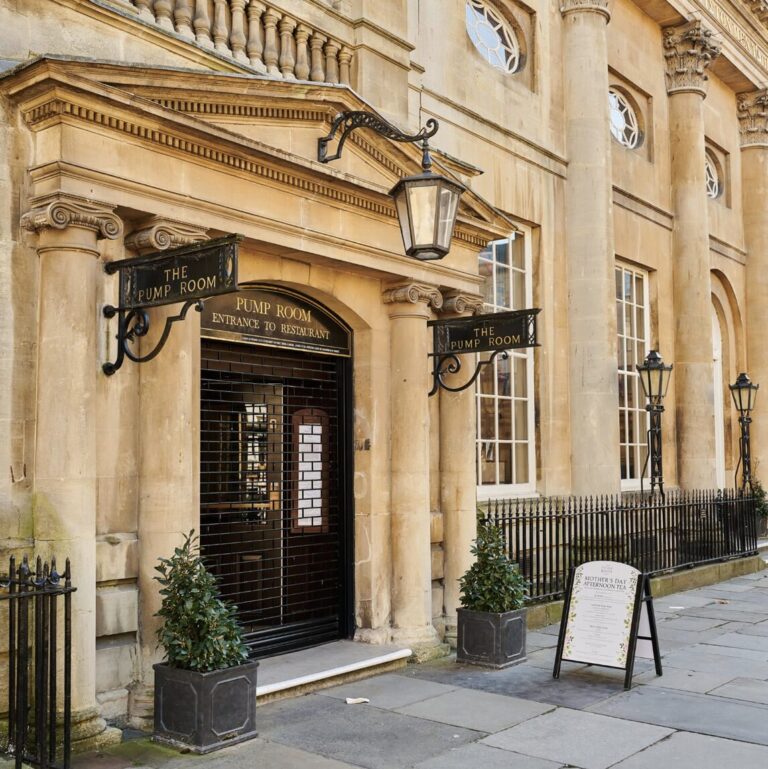
Grand Pump Room Hotel replaced the old White Hart Inn in 1869. [Towner]
18th C Europe & the Grand Tour Era
The English term “Hotel” when first used in the 1760s had a different connotation than the
French “Hotel” which meant a noble residence, town hall or large public building.
The first English use is actually adapted reuse being the conversion of
1630s portico houses on Covent Garden London into visitor accommodation [S-S]
The use of “Hotel” to describe a category of Architecture began around 1790 in both
England (Bath & Tunbridge Wells) & America, when they expanded from a residential
scale to an “urban” scale (although typically smaller in Europe than in America [S-S]
The Grand Tour from 17th-19th C involved young wealthy aristocrats in a tour circuit of Europe
over many months or even years seeking culture, education, health & pleasure, through mainly
Italy & France, but often extending to Germany, Austria, Spain, Portugal or even Scandinavia.
The main areas of interest for Grand Tourists were the classics, antiquities, fashionable society
art & architecture. A quest for romantic landscapes emerged in the mid 18th C, whilst discoveries
at Herculaneum in 1738 & Pompeii n 1748 attracted many new visitors. [Towner]
Grand Tourists initially used accommodation available to all travellers, with rural inns
often being poor but town & city accommodation improving over time [Towner]
Some cities developed distinct districts for visitor accommodation such as Faubourg St Germain
in Paris [Towner] and around the Piazza di Spagna in Rome. Florence was considered by many to have
the best hotels in Italy [Towner] whilst Switzerland established a reputation for good accommodation
in the late 18th & early 19th C with hotels & inns in Geneva, Basle, Berne & Lausanne.
Germany also received praise from the 1820s for hotels in Augsburg,
Cologne, Dresden Hamburg & Frankfurt [Towner]
Accommodation outside the major cities & tourist routes was
often dismal, dirty & full of bugs [Black]
When tourists were in a place for more than a few days, they typically used rented
accommodation which was well established by the 16th C [Towner] and where the tourists
arranged for all the services to be provided by a household pf servants [Baillie in Towner]
Hibbert mentions a range of recommended items needed by Grand Tourists incl [Hibbert]
Inflatable bath with bellows
lavender olive oil for bedbugs
two pairs of sheets.
He also mentions the deplorable condition of some inns in Italy
“… abominably nasty …generally destitute… bedroom without curtains ….
and windows without glass” [Hibbert]
Many French inns had only bed chambers with no parlours or Dining rooms [Black]
Conversely other inns were considered first class such as the Chalon in France
(which was furnished throughout with silk damask”) and inns in prestigious areas of Paris
such as Fauborg St Germain & Rue St Denis [Hibbert]
Many tourists chose private lodgings in Paris whilst some chose to rent furnished rooms.
The Hotel de Henry IV was considered by some the “finest in Europe” [Hibbert]
Like most transport hubs, Calais had a number of good inns, most notably Dessein’s while
most tourists in Paris stayed at the wide choice of hotels [Black]. Most 18th C visitors to Florence
stayed at Carlo’s Inn [Hibbert]
One of the first mountain inns opened in Chamonix in 1765. Accommodation in Germany was worse
than France but better than Eastern Europe. French provincial inns were generally unsatisfactory [Black]
German rural inns at this time were often little better than barns, although hotels in larger towns
were as good as anywhere in Europe & inns were comfortable at the famous spas of Baden, Carlsbad
& Wiesbaden [Hibbert] Inns of the Netherlands were generally thought tidy [Hibbert] or satisfactory [Black]
those in Liege, Aix & Spa very good & others in the Hague & Brussels declared by some the best in Europe
[Hibbert] As the quality of accommodation was varied, some tourists took camp beds in they coaches [Black]
Starke has noted that as the wealth of the continental aristocrats declined in the early 19th C, some of
their palaces were converted into ready furnished lodgings for visitors [Starke in Towner] Ritchie noted that
the economic decline of Venice ensured a steady supply of such accommodation –
an early form of adaptive reuse buildings [Ritchie in Towner]
Bankers provided services to tourists which included finding lodgings [Pottle in Tower]. Town maps &
guidebooks appeared before 1600, were published for most Italian towns by 1700, and were common
throughout Europe by 1800 [Towner] Thomas Nugent (from 1749), Misson (1714) & Lassels (1686)
published specialist guidebooks for the Grand Tour [Towner]
Prices for accommodation used on the Grand Tour had seasonal fluctuations such as lodgings
in Rome being halved after the end of easter [Matthews in Towner] Pevsner describes the Badischer
Hof in Baden- Baden which as an adapted hotel converted in 1809 from a Capuchin convent which
48 rooms , a ballroom with balcony & moveable stage, dining, library, reading room, parlours, a
bathing establishment, stables & coachhouse [Pevsner]

Industrial & Transport Revolutions 19th C
The Industrial Revolution & particularly the Transport revolution
super-charged travel, tourism and related accommodation.
The development of steam ships & particularly railways allowed
the rapid geographic expansion of travel markets worldwide.
The increased capacity & speed of steamships & railways fostered mass tourism
and travel for a wider cross-section of society. This expanded and diversified the range of tourism
destinations as well as the types & sizes of accommodation properties
World Expos were held regularly during the 19th C to promote industrial innovations
as well as the cultural attractions of the host cities.
London 1851
Paris 1855
Paris 1867
Vienna 1873
Philadelphia 1876
Paris 1878
Paris 1889
Chicago 1893
Paris 1900
New hotels were built for the exhibitions [Pevsner]
Grand Hotel du Louvre – Paris 1855
700 room Grand Hotel – Paris 1867
Continental by H Blondel – Paris 1878
The magnificent Eiffel Tower was built for the Paris 1889 Exhibition
As part of the Exhibitions, Thomas Cook arranged for adapted accommodation [Withey]
1,000 room dormitory hotel – from the Mechanic’s Home
Visitors Home with B&B – from a newly-built tenement
Basic B&B in Paris – from an industrial building
Luxury suites in Paris – from a house
The famous Royal Danieli in Venice ia also an adapted hotel having been converted
from a 14th C palace in 1822 [Pevsner]
Pevsner notes that the Royal Hotel at Plymouth in 1819 to the design of Foulston included a
theatre, a 77′ (23m) long assembly rooms, coffee room, bar, commercial room, suites with dining
sitting & bedroom, and a separate Athenaeum *literary or philosophical society of club [Pevsner]
The Stamford Hotel is a landmark in the 19th C transformation of the coaching Inn in England from
a domestic character to a public building. Railway station hotels emerged, with Gilbert Scott’s Gothic
masterpiece at the St Pancras Station being the grandest example [Richardson]
Other good English hotels of the early 19th C include [Pevsner]
Royal Victoria St Leonards (1827)
Sea Hotel Worthing (1827)
Clarendon Leamington (1830)
Regent Leamington (1819)
The Queens at Cheltenham (1838) was the finest of he early English Spas and designed by RW Jearrad,
which featured suites for families, rooms for single gentlemen and rooms convertible from sitting rooms
to bedrooms. Some hotels of this era had suites only such as London Brown’s Hotel and the
Meurice & Bristol Hotel in Paris which had 2-5 room suites [Pevsner]
The earliest large English hotels were built by railway companies adjacent to stations in London [Richardson]
Euston – 1839
Fleetwood – 1841
Hull – 1849
York – 1853
Folkestone – 1854
Dover – 1854
Paddington – 1854
Great Northern – 1855
Victoria – 1861
Charing Cross – 1864
In 1892 the Pera Palace was built in Istanbul to serve Orient Express travellers [Richardson]
The largest & grandest railway hotel was the Franco-English high-Gothic Midland Hotel at
St Pancras station (1876) by George Gilbert Scott [Pevsner]
Some other Gothic railway hotels were converted to other uses with the decline of railways
Great Malvery – to a school
Caste Hotel Aberystwyth – to the Uni of Wales
The 700 room Grand Hotel du Louvre Paris (1855) was converted to
a department store in 1880s [Pevsner]
The 1860s saw many large hotels & resorts which Pevsner considered “joyless”. These include [Pevsner]
Grosvenor Victoria Station (1860) by James Knowles – with servants rooms on top floor !
Westminster Palace by A&W Moseley – with 286 rooms, 70 lavatories & 14 bathrooms
Charing Cross Hotel (1865) by EM Barry
Langham (1865) by Giles & Murray
Grand hotel Scarborough (1867) by Cuthbert Brodrick
In the 1870s & 1880s, Trafalgar Square had 3 new hotels [Pevsner]
Victoria (1876)
Grand (1879)
Metropole (1885)
The Cecil (1886) with 800 rooms was nearby in the Strand -Europe’s largest hotel [Pevsner]
Other “modern” European hotels of this era are [Pevsner]
Amstel Amsterdam (1866) – by C Outshoorn
Frankfurter Hof Frankfurt (1876) – by Lucius & Bluntschli
Kaiserhof Berlin (1876) – by Hennicke & von der Heide
Grand Hotel Wien (1871) – by Karl Tietz
Metropole Vienna (1873) – by E Schumann & L Tischler
Lage Geneva was a “continuous terrace of hotels” with the Schweizerhof Lucerne having
the longest tradition
As the British were the pre-eminent customers of luxury hotels in the late 19th C, many hotels
were given names appealing to them including [Pevsner]
11 Hotel Victorias in Europe
5 Hotel d’Angleterres – incl Baden Baden, St Petersburg & Copenhagen
European Hotels were not as large as their American contemporaries with only 22 hotels in
Switzerland by the 1970s having more than 300 rooms, and Nova Park Zurich being
the largest with 1,000 rooms. [Pevsner]
Negalmacker’s Wagons-Lits railway company founded the Compagnie Internationale des
Grand Hotels (CIDGH) in 1890 [Withey] which was the world’s first International Hotel
Chain [Richardson] CIDGH built hotels in
Nice
Monte Carlo
Constantinople
Cairo
Brindisi
Lisbon
Ostend
Beijing (1904)
CIDGH also undertook adaptive reuse hotel including converting the palace of the
Egyptian Khedive Cairo into a luxury hotel [Withey]
The Canadian Pacific & other American railway companies also built hotels which had elegant
dining rooms & lavish public areas [Withey]
Other Grand European Hotels in this era include [Withey; Richardson]
Westminster Palace (1859) – 1st London hotel with a lift
Langham London (1862)
Imperial Vienna (1865)
Amstel Amsterdam (1867)
Continental Paris (1878)
Palais d’Orsay Paris (1900)
Grand Hotel Nationale Lucerne
Other massive hotels were built between 1870s & 1914 imitating royal palaces
including bathrooms to appeal to the American visitors [Withey]
The Swiss Cesar Ritz is an icon of the hotel industry and synonymous with luxury.
His first Ritz Hotel was opened in Paris in 1898 and is an adaptive reuse hotel
converted from a row of townhouses in Place Vendome. The architect was Charles Mewes
& his head chef was Auguste Escoffier, who revolutionised haute cuisine.
In 1899 Ritz opened the Carlton London. This and the Ritz Paris had a bath in
every guestroom which was a first for European hotels. [Withey]
Escoffier & Mewes ventured into the luxury ship business & their Amerika was
in competition with other floating hotels such as the Lusitania & Titanic
By 1901 the Ritz Development Corp also had hotels in Rome, Frankfurt,
Wiesbaden, Palermo , Monte Carlo & Lucerne [Withey]
The Ritz London (1906) & Ritz-Carlton New York (1907) followed
The London Ritz had 150 bedrooms & 75 bathrooms arranged in 2-bedroom
suites with a sitting room & separate lavatory [Richardson]
Many of the luxury hotels , trains & ships in Europe tended to be beautiful but homogenous,
losing some of their local character [Withey] This became a common theme in “International”
branded hotels until quite recently.
With British support, good hotels are built in India from the 1850s including in Agra & Delhi
with the Great Eastern Hotel in Calcutta & the Great Western Hotel in Bombay considered
Grand by European standards [Withey] Most other hotels outside the major cities were barely
acceptable & travelers depended on “dark bungalows” which were basic cottage with bedrooms
& cooking built by the British at regular intervals. Even up to the 1920s, travellers carried
their own bedding [Withey]
By the end of the 19th C, Egypt and become a winter resort, and Thomas Cook ultimately
built 2 luxury hotels in Luxor with a resident physician & chaplain to cater for invalids
and another hotel at Aswan [Withey] Some tourists in Egypt in the 19th C traded camping almost
like a hotel with huge tents, carpets, iron bedsteads, tables & chairs [Withey]
In the 1890s the Gezirah Palace built in 1869 for the opening of the Suez Canal was
converted into a luxury hotel – another adaptive reuse property [Withey]
Following the opening up of Japan in 1868, western-style hotels developed quickly in
Yokohama & Kobe, whereas visitors to more traditional places such as Kamakura chose to
stay at local teahouses, which would seem spartan to most westerners with their shoji
screens & tatami mats. By the 1890s, traditionally-styles inns were being built with some
western amenities to please tourists [Withey]
Other Asian destinations on a world tour of the day and luxury hotels influences by their
European colonial masters including Singapore’s famous Raffles Hotel built n 1877.
Biarritz was “launched” in 1845 by Empress Eugene (wife of Napoleon III) by building the
Hotel Palais Hotel on the beach becoming one of the first seaside resorts [Signaux]
Winter tourism resorts started in 1864 with the creation of St Moritz by Johannes Barrett.
Reichman’s Hotel Milan in 1850 – another adaptive reuse hotel being converted from a
patrician’s palace – was the first Hotel to have a bathroom in every room. New hotels in Europe
however were slow to match the USA trend towards all ensuite bathrooms. For example the
Savoy London in 1889 only had 67 bathrooms for 400 bedrooms. By 1906 the
Ritz Paris had one bathroom per bedroom [Pevsner]
The first “Chain” hotel group was Paran Stevens [Williamson]
Architectural “style” was diversifying & “historicism” was disappearing in the early 20th C
with hotels of that era adopting various styles of the day –
Click on Architectural Styles for more info.
1920s-195
Visitor Accommodation in America
Sandoval-Strausz’s [S-S] prodigious “Hotels : An American History” is an
invaluable source for many of the facts & anecdotes below
S-S believes it was inevitable that Americans invented the “modern” hotel as an architectural
& social form & indispensable part of every American city”, as it was symbolic of their
“beliefs about democracy, commerce & equality”, a response to their extraordinary mobility,
capitalist & entrepreneurial ideology & the ” material manifestation of heir cultural tolerance” [S-S]
American hotels evolved over the 200 years from independence in a series of phases [S-S]
which were divided by a various geo-political, economic, social or technological events –
1. Public Houses – Up to 1815
2. Palaces of the People – 1815-1840
3. Expansion & Diversification – 1840-1876
4. Golden Age & Hotel Empires – 1876-1914
5. World Wars & Inter-wars – 1920s-1940s
Late 20th C – 1945-1999
USA 1 : Public Houses – Up to 1815
Public houses (commonly called inns, taverns or ordinaries) received a lucrative liquor licence in
exchange for providing visitor accommodation and almost every community in the Colonial period
had one. Most of these public houses were modest vernacular buildings converted from residences
making adaptive reuse hotels a significant part of American hotel history [S-S]
The Frances Tavern in NYC was a converted merchant’s mansion while the Indian Queen Tavern
Baltimore was more typical. Most had 6-10 rooms with shared bedrooms, and the largest
by 1789 was a 3 -storey building with 20 rooms. [S-S]
The City Tavern Philadelphia in 1772 was one the few custom-designed public houses
but stained the appearance of a residence [S-S]
The first custom design for a “modern” hotel was by James Hoban for the Union Public Hotel
Washington in 1793 in an elegant Georgian-style & the largest privately-owned building in the city
but was ill-fated by financial problems & was repurposed for Govt offices prior to completion [S-S]
The first custom-designed functioning hotel opened in America was the City Hotel New York 1794,
in a “Federal’ Style with stone embellishments & roof dormers, comprising 137 rooms, ballroom, parlours
& even a circulating library. It was considered immense by European standards [S-S; Williamson]
Other cities including Newport, Boston & Richmond tried to emulate the City Hotel but were
too ambitious, still a common problem amongst aspiring hotel developers to this day.
Designs for the Boston & Richmond were prepared by 2 of the leafing architects of the day,
Charles Bullfinch & Benjamin Henry Latrobe respectively [S-S]
The Boston Exchange Coffee House & Hotel (1809) designed by her Benjamin became America’s
best “modern” hotel of the 1st generation of hotels and the largest building in the colony at the time
with its 7 floors containing over 200 rooms, apartments, a 30m wide glazed dome over a 5 level
“atrium” ringed with balconies, dining room for 300, ballroom, bar, coffee room, shops, public
eating room, observatory, newspaper room, offices for rent, basement kitchen, larder. cellars &
a Masonic Hall. It burnt down in 1818 when there were no fire ladders long enough to reach the
attic fire [D=DS; Pevsner]
Other early hotels included [Williamson; Pevsner] –
Mansion House Philadelphia (1807) – Originally Exchange Coffee House
Washington Hall NY (1809)
Tammany Hotel NY (1810)
The Achitecture & interiors of these early hotels reflected the commercial, cultural & political aspirations of
their societies where market success, social harmony, democratic freedoms & refined materials were more
valued than aristocratic titles [S-S] Most of the hotels were financed by people with vested interests in
transportation infrastructure or were property speculators, but the British trade embargoes & the war of 1812
severly impacted business causing hotel bankruptcies & hotel construction to stagnate for a decade [S-S]
USA 2 : Palaces of the People : 1815-1840
The 2nd generation of hotels were fuelled by the 1815 peace treaty with Britain, the admission of
Indiana, Mississippi, Illinois, Alabama & Missouri 1816-1821, early industrialisation due t ar restrictions,
massive expansion west, frontier agricultural riches, the resumption of Trans-Atlantic trade &
the transport revolution on road, water & rail [S-S]
Transportation and accommodation were intrinsically inter-connected, often commercially and even physically
with hotels becoming seen more often as public ir community projects , which fostered a more egalitarian
view of hotels as “Palaces of the People” [S-S] This perception was strengthened by hotels typically being
financed privately or by public share offerings and with very limited government subsidies *unlike the elitist
arrangements for the 1st generation hotels). The Revere Hotel Boston (1843) was developed & owned
by the local charitable Mechanics Association who maintained their club & raeading room in the property [S-S]
During a hesitant decade following the war, only a few small hotels were built including the Union Hotel
Richmond (1816) Missouri Hotel St Louis (19189) & Bunkers Mansion House (1827) although adapted hotels
continued wth the conversion of residences [S-S] The completion of the Erie Canal linking the Great Lakes
with the Ohio Rover in 1825 cut shipping costs by 90% & encouraged both intense competition
amongst the existing Atlantic cities & a common view that hotels were essential for municipal
prosperity in the new settlements [S-S]
The hotels to emerge in larger cities included Barnum’s City Hotel Baltimore (1826) designed by
William F Small which had the first bath-house & barbecue shop; the National Hotel Washington
(1827) with family rooms, 12 parlours & numerous public rooms; the Adelphi Hotel NYC (1827) which
at 6 stories was New York’s first “skyscraper” [Williamson; Pevsner]
Adapted hotels continued with conversions of [S-S; Williamson] –
Scholls & mansions in Philadelphia
Older buildings in St Louis
Town-house into the America Hotel (1827)
By 1840, 33 of the 40 largest cities had a substantial purpose-built hotel as did 87% of the settlements
with more than 10,000 people. These included [S-S] –
Savannah (1821
Providence (1823)
Rochester (1826)
Philadelphia (1828)
Portland (1829)
Cincinatti (1830)
New Orleans (1831)
Pittsburgh (1832)
Louisville (1832)
Albany (1833)
Chicago (1835)
Detroit (1836)
Buffalo (1836)
Newark (1836)
Norfolk (1837)
Cleveland (1837)
Charleston (1838)
S-S estimated that 20% of white Americans would have been occasional hotel guests with overseas visitors
“commenting on the social heterogeneity of American Hotels” [S-S] All locals were encouraged to use their hotels
bars , dining halls & assembly rooms and hotels hosted small exhibitions, spectacles, trade & political meetings [S-S]
The first resort in America is unknown, although Williamson nominates Stafford Springs Connecticut and
states that Hot Springs Virginia had accommodation in 1766 [Williamson] Many early resorts had a religious
focus , with Ocean Drive New Jersey controlled by the Methodists being a good example of the
uniquely-American “Camp-Meeting” styled hotels [Williamson]. Saratoga’s springs were discovered in 1767,
but only had it’s first log cabin for visitors in 1797, but became the most fashionable of he America Spas and
the centre of gambling [Wiliamson] which by 1835 boasted huge luxury hotels [Withey]
Niagara Falls was popular enough in 1820 to support the Eagle Tavern [Williamson]
The temperance (anti-alcohol) movement from 1808 influenced the growth of “Dry” hotels such as the
Marlboro Boston (1820). Even NYC had 4 small temperance hotels by 1847 [Williamson] Commercial pressure
for bars was high however as they were profitable and usually compensated for the losses in the holel
dining rooms [Williamson] – still a common refrain for many hotels.
One of the lading hotels doing this period was the Greek Revival-styled Tremont House Boston (1829) which was
the largest & costliest building in the USA (UD$300k) featuring high ceilings, marble-mosaic floors in the lobby
(called the “office” until 1850) & the fist to have single & double rooms, free soap, lockable doors, baggage
room, bellboys & French cuisine [Richardson; Williamson] Designed by Isiah Rogers and described by
Dickens as a “trifle smaller than Bedford Square”, the hotel had [Pevsner; Williamson] –
170 rooms
200 seat dining room
6 “Club” rooms each 6mx9m interconnected in 3 pairs
separate drawing & receiving rooms for men & women
8 WCs & 8 Bathing rooms
Bar separate from lobby (1st)
“Clerks” or concierges
His design style persisted for decades with interior planning of hotels still following
his plans for Tremont House a century later [Williamson]
Tremont House closed temporarily for modernisation in 1852 and 1889
before being demolished in 1894. [Williamson]
Isiah Rogers was also the architect of many more luxury hotels [Williamson]
Astor House NY
Burnet House Concinatti
St Charles New Orleans,
Battle House Mobile
Galt House Louisville
His masterpiece – Charleston House South Carolina
Astor House NY (1836) set new standards of luxury accommodation [Withey, Pevsner; Williamson]
309 rooms
20 parlours
17 bathing rooms
dedicated gas & steam plants
printing plant for menus
The Astor closed for remodelling & modernisation in 1875 [Williamson] incl
hot water to rooms
2 lifts
Other less luxurious hotels were being built at this time [Willamson; Pevsner]
Holt’s Hotel NYC (1833) – with 255 rooms (the largest hotel at the time)
St Charles New Orleans with 600 beds
Many of the hotels were also HQ for “Clubs” of professional or business groups, and even
dedicate Clubs were created from 1836, groups such as Rotarians & Lions met regularly at hotels
for lunches or dinners Political banquets were also very popular after the revolution [Williamson]
The hotel frenzy of this era proved hat hotels could be reliable investments, but was halted
by The Panic of 1837 and the depression that followed [S-S]
USA 3 : Expansion & Diversification : 1840-1876
During the 2nd era and particularly this 3rd era of American holes, the trend was for
vast geographic expansion and diversification of accommodation types
Tne area of the US had increased by over half between 1845-9 with the annexation of Texas in 1845,
securing Oregon in 1846 and seizing New Mexico, Colorado, Arizona, Utah, Nevada & California from
Mexico in 1848. Together with the discovery of old in California in 1848, the national transport system was
reoriented & expanded to run east-west and with it the growth of hotels at key transport inter-changes &
terminals. New hotels went hand0in-hand with the expansion of the railway lines which tripled from 1840-1850.
The number of hotels skyrocketed after 1850. By 1869 the railway stretched from the Atlantic to the Pacific &
a national network of hotels as emerging [S-S]
S-S describes 7 types of hotels emerging with the old inns & taverns becoming obsolete
and luxury Hotels heavily outnumbered by the other 6 types [S-S]
Luxury
Commercial
Middle-Class
Marginal
Resort
Railroad
Settlement
Commercial hotels which emerged around 1820 in NY, were basic & affordable business-oriented
properties serving travelling salesman , clerks, wholesalers & buyers, initially “bagmen” for
manufacturers, then “drummers”, drumming up business, who numbered 60,000 by 1860 and
200,000 by 1883 [Williamson] They were typically smaller & less ornate than luxury hotels, with “light”
ornamentation, in secondary locations, often on a single lot, near wholesaling centres, & featuring
“sample rooms” (sometimes 100s of them) for salesman tp display they goods [S-S]
Another source of guests for the hotels from 1869 were the travelling theatre companies which by
the end of the 19th C had 8,000 people all over the country [Williamson]
Southern planters & their families provided a large % of visitors to NYC in the mid 19th C [Williamson]
Food was always a major part of any American Hotel, with some describing breakfast as almost a
“religious ceremony” [Williamson] Separate dining rooms (called men’s “ordinary” & women’s “ordinary”)
were common in the early 19th C [Williamson]. The New York Hotel was the first to offer “Private dining”
(or room service) in the mid 19th C [Williamson] French cuisine was introduced shortly after the
Frech Revolution in 1789 and was dominant in most holes by 1853. [Williamson] These trends of course
impacted the planning, design & facilities of hotels.
The “holiday Hotels” of the mid 1800s were typically of timber with long verandahs. Many burnt down,
such as the gigantic Mount Vernon Hotel Cape May. A fabulous survivor is the Grand Hotel Mackinac
Island Michigan (1887) designed by Mason & Rice, with 1,000 guests and suites
rented by the Vanderbilts & the Astors. [Pevsner]
The Clifton Hotel at Niagara Falls was luxurious [Wiley]
Saratoga & Newport in the north, Cape May & Long Beach on the new Jersey coast & White
Sulphur in the south were the greta match-making & social-climbing centres of the mid 19th C, with
such things as “courting yards” & “proposal sofas” and a band with a famous conductor [Williamson]
Cape May became popular after the 1812 war, with the grandest of he hotels, Mount Vernon Hotel
opening in 1853, Long Branch becoming popular after the Civil war and Atlantic City after 1880 [Willamson]
Vanderbilt popularised Coney Island in the 1840s with his Oceanic Hotel, and 3 other grand hotels were built in
the late 1870s. By 1895, Coney Island had morphed from a luxury destination into one for the masses [Williamson]
The 30 years prior to the Civil War starting in 1861, saw a frenzy of hotels trying to outdo each other in
architecture & sumptuous interiors, spending money with a “sinful extravagance”. [Williamson]
United States Hotel Boston (1840)
The American House Boston (1840s)
Boylston Hotel Boston (1837)
Shawmut House, Boston (1837)
Adam’s House (late 1840s)
Paran Steven’s Revere House Boston (1847)
Old Parker House Boston (1840)
Howard Hotel NYC (1839)
Carlton House NYC (1840)
The Clarendon NYC (1838)
The New York Hotel NYC (1844) – cost $500k
Irving House NYC (1848) – 1st bridal chamber
Metropolitan NYC (1852)
St Nicholas NYC (1853)
Taylor’s International Hotel & Saloon NYC (1853)
Prescott House NYC (1853)
Fifth Save Hotel NYC (1859)
Bridal chambers became special “suites” from the 1880s [Williamson]
St Nicholas NY was undoubtedly, according to Williamson, the outstanding example
of “Hoteldom’s super-elegance” based on its
22′ (6.7m) high ceilings
gold-embroidered drapes
mahogany & walnut panelling
Flemish tapestries
Turkish rugs
Brussels carpets
A 500 room extension in 1856 made it the largest & most expensive at the time
but it was demolished in 1884 [Williamson]
Some grand hotels were converted to other uses incl office buildings,
loft buildings or warehouses [Williamson]
Between 1850 & 1855, many new hotels wrestle built based on forecast crowds for America’s first
“Worlds Fair” in NY [Williamson] including –
St Denis (1850)
Gramercy (1850)
The Cosmopolitan (185)
Breevort (1854)
Paran Stevens was rhetorical most famous of the mid 19th C hoteliers and is credited by Williamson
as being the fist “Chain Operator” of hotels, or in fact any industry in America. Other iconic Hoteliers
since include Ellsworth Statler, Conrad Hilton & Bill Marriott.
Before gold s discovered in California in 1848, San Francisco had only one small tavern, but
within 25 years. was one of the greatest “hotel cities” in the world. Typical of the earliest hotels
after the gold discovery was Parker House (1849) made of timber & cotton cloth with a gaming hall,
bar rooms & restaurant on the 1st floor & bunk rooms above [Williamson] By the 1850s a boom of
construction had delivered several outstanding hotels [Williamson] including
The Cosmopolitan (1859)
Occidental (1861) – 400 rooms
Lick House (1861)
Russ House (1862)
The average gold prospectors stayed at the What Cheer House (1855) which
also served 4,000 meals a day
Another new hotel after the gold rush was the magnificent Palace Hotel (1874) by Joh Gaynor
which was the largest & most expensive hotel in America at the time [Pevsner; Williamson]
755 rooms
36 sqm (400 sq ‘) guest rooms
770 sqm (8,300 sq’) dining room
Bar
Breakfast room
music/ballroom
several private dining rooms
children’s dining room
ladies parlour
reading room
barber
public baths
billiard room
several “committee rooms”
630 sqm (6,800 sq’) glass-covered central court
Tropical garden
clerk (concierge) on each floor
pneumatic tubes for packages
The Palace was considered quake proof and fireproof with masonry-covered iron frames,
water tanks, fire pumps & fire hoses, but ut still burnt down after the 1906 earthquake.
Like Chicago, San Francisco rebuilt after their big fire including
6 adapted hotels converted from apartment buildings [Williamson]
By 1850, settlers were pushing westward and taverns emerged everywhere in towns & trails to
provide basic shared accommodation, often in log cabins, such as the Fork Tavern Chicago (1828)
Towns grew rapidly with a hotel on a prominent corner as one of he first buildings, and cities like Chicago,
St Louis & San Francisco built hotels in the 1860s & 1870s [Willliamson]
Cities in the mid-west & others outside the eastern seaboard also had impressive new hotels as bold
statements of their pioneering spirit [Williamson] including –
New Orelans
St Charles (1837)
St Louis (1838)
Verandah & Exchange (tbc)
Philadelphia
America House (1844)
Washington House (1845)
Girard House (1852)
La Pierre Hotel (1853)
Old Continental Hotel (1860)
Baltimore
Barnum’s City Hotel (1826)
Eutaw House (1835)
Gilmore House (1856)
Pittsburgh
Monongahela House (tbc)
Cincinatti
Burnet House (1850)
Spencer House (1853)
Louisville
Galt House (tbc)
St Louis
Planters Hotel (1841)
Buffalo
The American (1836)
Omaha was the country’s getaway destination of the 1860s & 1870s, but
profitability couldn’t be sustained , and Herndon House Hotel (1858)
converted to Railway offices in 1870
Winter-resort centres in Florida and in towns like Lake Tahoe
California emerged in the 1870s.
Before the fire of 1871, Chicago had built excellent hotels such as the Lake House (1835)
Sherman House (1850) & Briggs House (1851). After the fire, hotels were rebuilt as
good as any in NY or Boston and by 1873 there were 20 new hotels in the city [Williamson]
Tremont House
Sherman House
Grand Pacific Hotel
Palmer House
Spa bath emporiums were popular during the 1840s with every conceivable type
available some parts of hotels & some separate [Williamson] including
Compressed air
Immersion
Medicated shampoo
Steam
Vapour
Mineral
Sitz
Mud
Photographic
Galvanic
Swedish
Russian ….
An extraordinary number of hotels were destroyed by fire during the 19th C [Williamson] incl
La Farge NY – on its opening night in 1854
American Hotel Buffalo (1836) – in 1850 & again in 1865
6 fires in the first 3 years of the California gold rush
Palmer House Chicago (1870) – in 1871 after saying “the only fire-proof hotel in the world”
Lindell St Louis (1863) – in 1867
Meanwhile Mark Twain stayed in stagecoach stations during the 1860s which were
basic adobe huts with sod roofs, dirt floors & minimal furniture [Withey]
More Grand hotels continued throughout the 19th C [Pevsner] including
The Metropolitan NY (1852) – 1000 guests
Fifth Ave NY (1859)
Windsor (1873)
Buckingham (1876)\
Brown Palace Denver (tbc)
The Lindell Hotel St Louis (tbc) was designed by Thomas Walsh & had
1200 guests in 525 rooms
19 parlours
2 dining rooms with carvery/dance floor between
USA 4 : The Gilded Age & Hotel Empires : 1876-1914
Rudyard Kipling was astonished by San Francisco during his visit in 1889 including the 1,000 room
Palace Hotel [Withey] The United States Hotel Saratoga Springs had 768 rooms & 65 suites,
the largest in he world at the time [Williamson]
The old 1,500 room Waldorf-Astoria in NYC comprised the Waldorf (1893) &
the Astoria (1897) defined luxury at that time [Withey]
The prominence of parlour-and-bedroom suits in the USA was partly a reflection of the
relatively high number of “permanents” (residents) living in hotels from the early 19th C,
with approx 1/3 of all NYC guests in 1885. Most hotels had a mix of suites (for residents
incl bachelors & married couples) and typical rooms (for “transients”) [Pevsner; Williamson]
Fifth Ave Hotel – 530 rooms & 100 suites
Empire Hotel – 140 suites & only 24 singles
Williamson speculated that the attraction of hotels to residents was partly social and partly
economic due to housing shortages/affordability, or work mobility, and few strongly after WW1
in cities like NYC. “Family Hotels” spring up near transport terminals like
the Grand Union Hotel NYC (1868). [Williamson]
When the first transcontinental railway opened in 1869, there were no fist-class hotels along the route
but 10 years later this was changing as entrepreneurs built luxury hotels as part of promoting
“The West” and transforming the sparsely settled frontier into a tourist Mecca [Withey]
The fist luxury hotel as built in Colorado Springs by 1872, and within 8 years and several elegant
hotels A development subsidiary off he Southern Pacific [SP] Railroad bought thousands of
acres on the Monterey Peninsula and 1881 the Del Monte Hotel opened [Withey].
A development subsidiary of the Northern Pacific [NP] Railway built their fist hotel in 1883 at
Mammoth Hot Springs in a garish Queen Anne style painted green with red roof as well
as 3 temporary “Tent Hotels” (replaced within a few years by permanent hotels) which all allowed
for a 5-day loop trip staying at a different hotel each night [Withey]
In 1904 the luxury Old Faithful Inn was designed by Chicago architect Robert Reamer and built
in a rustic style with luxury appointments which defined a new type of “Grand Hotel” for
wilderness settings. In 1896 a larger hotel had been built at th Grand Canyon. [Withey]
In he 1860s , the Canadian Pacific Railway was building luxury hotels in locations that would
later become National Parks, such as Banff Springs Hotel & the Chateau Lake Louise in the
Rockies. The Union Pacific [UP] also built & operated hotels in the parks [Withey]
Luxury hotels went up throughout southern California in the 1880s & 1890s, the Hotel Raymond
Pasadena being the first, next. door to which th Santa Fe built a railway station. The Coronado
Hotel San Diego and the Arlington Hotel Santa Barbara closely followed [Withey]
Resorts were also growing in size in the late 19th C [Pevsner]
The United States Saratoga (1875) – 800 beds
Congress Hall Hotel – 1,000 beds
Grand Union – 1,500 beds
Royal Poinciana Palm Beach Florida – 1,700 beds
Although “discovered” in 1859, the Grand Canyon still only had crude tent cabins by he 1880s, as
the vast desert had little appeal for 19th century tourists. The first hotel was a simple log-cabin style
in 1897, but it as only after the railway reached then rim of the canyon that Santa Fev Railway Co
built the El Tovar Hotel in 1905 with rustic architecture & luxurious service , as well as a museum
and gift shopping selling Navajo craft items. The Grand Canyon became a National Muniment in 1908
and a National Park in 1919 [Withie]
Pevsner considers Adler & Sullivan’s Auditorium Hotel Chicago (1889) as architecturally the
most valuable hotel of the 19th C. It was a mixed-use building with 400 rooms, wrapped around a
theatre plus an office building [Pevsner]
The first all-steel skeleton hotels were the New Netherlands (1893) and Savoy (1895) whilst
the Marlborough-Blenheim Atlantic City New Jersey by Price & McLanahan was an early
reinforced-concrete (R/C) hotel & the world’s largest R/C building in 1905 [Pevsner]
The great city fires in Chicago (1891) Baltimore (1904) & San Francisco (1906) destroyed
many hotels but entrepreneurs were also responsible for demolishing & rebuilding hotels such
as the Planters St Louis (orig 1837) rebuilt in 1894 [Williamson]
Segregation by sex in hotel public areas had largely died out by 1870 [Williamson], the Waldorf even
having a smoking room (Turkish Salt) for both sexes on 1901 [Pevsner]
Single business women were still provided with exclusive accommodation for privacy and security into the
20th C. The Martha Washington Hotel NYC 1(1903) was the first hotel exclusively for women [Williamson]
The pre-eminent Hotel architect in the late 19th C was Henry J Hardenbergh who designed many
landmark hotels which still survive [Pevsner]
The Martinique NYC (1897)
Willard Washington (1907)
The Plaza NYC (1907)
He also designed the original Waldorf in 1893 which was demolished in 1929 to make way for
the Empire State Building. One of his design guides was one lift per 150 guests (75 rooms) [Pevsner]
When the Glacier National Park opened in 1910, the Great Northern Co had built a small Swiss-chalet
style hotel at the western entrance, a small hotel at the eastern entry, 3 other hotels incl the 300 room
Glacier Hotel as well as 6 tent camps [Withey]
When Yosemite National Park first opened up, accommodation was primitive with small bedrooms
separated by canvas sheets. The Upper Hotel was expanded & upgraded and it as only in
1907 that the regional railway Co built a luxury hotel at the railway terminus [Withey]
Tulsa was like an early 20th C Chicago or an Francisco when a hotel boom followed he discovery
of oil n 1901, ad within 30 years and 30 hotels [Williamson]
Meanwhile the Santa Fe Railroad Co chose an area near Las Vegas Hot Springs for their
first Resort, targeting health-conscious travelers [Withey]
Throughout the west, new hotels & resorts catered of the budget travelers, sometimes with
religious or educational sponsors such as [Withey]
Laguna Beach (1884)
Huntington Bach (1904)
Mount Herman Santa Cruz Mountains (1905)
Meanwhile tent camps were set but in Yellowstone & Yosemite with tent cabins,
dining rooms, dance floor, swimming pool and campfire programs [Withey]
The height of hotels in NYC (as with all buildings) was increasing rapidly in the 20th C [Pevsner]
New Netherland (1893) – 225 ‘ (69m)
Savoy Plaza (1927) – 36 floors – by McKim Mead & White
Waldorf-Astoria (1927) – 47 floors or 625′ (190m)
The style of hotel designs was vey diverse [Pevsner]
Grecian – Tremon House & Astor House
Utilitarian – St Nicholas (1854) – By Trench & Snook
Utilitarian – Fifth Ave (1859) – by Griffith Thomas
Italianate – Irving House
French – Grand Hotel
French with pavilions – Albetrmarle (1860) by R Renwick & Auchmaty
French with pavilion roofs – Grand Union (1872)
German Renaissance – Waldorf (1893)
Queen Anne – Victoria (1871)
Italian Renaissance – Plaza Hotel (1890) – by McKm Mead & White
Italian Renaissance – Holland House (1891) by Harding & Gooch
Italian Renaissance – Savoy Hotel (1895) by Ralph & Townsend
Cast Iron – Lafarge Hotel (1855)
Mission (Spanish Gothic) – Ponve de Leon St Augustine
Click on Architectural Styles for detailed info about all styles
Interiors were also very diverse with the Fifth Ave Hotel for example having [Pevsner[
Louis XIII & Middle Ages – Entrance Hall
Louis XIV – Drawing room
Queen Anne – Dining room
Commercial Business hotels emerged in the US during the early 20th C with
the first being the Statler Hotel Buffalo (1908), which featured [Richardson]
ensuite bathrooms
circulating iced water
Convenient light switch inside entry door
Free newspapers
Ellsworth Statler started the first American hotel-keeping chain at this time
The early 20th C saw many magnificent hotels [Pevsner] incl
Astor NYC (1904) – 700 rooms – by Clinton & Russell
La Salle Chicago (1909) – 1,100 rooms
Jefferson Hotel St Louis (1909) – 1,500 rooms
USA 5 :: 1920s-1940s
During the 1920s, hotels became even bigger with the opening of huge hotels [Richardson]
Stevens Hotel Chicago – now Conrad Hilton (1929) – 3,000 rooms – by JA Holabird
Pierre NYC (1930)
Waldorf-Astoria NYC (1931) – 2,250 rooms
However 85% of hotels in America went into receivership or some form of
liquidation during the Great Depression of the 1930s [Richardson]
The date of the first motel varies amongst commentators from the 1913 Douglas Arizona [Pevsner]
to cabins at Lincoln Park LA (1922) The first property called a “Motel” was Motel Inn on Highway 101
in California (1925). By the end of WW2, there were 15,000 motels in the USA [Richardson]
In the fist 15 years of he 20th C & particularly between the world wars, most of he 19th C hotels
were lost – refer to the Notable Hotel Register USA – mainly due to antiquated technology. [Williamson]
Williamson claims that the modern hotel had a lifespan of less than 50 years, although many buildings
lived on by being adapted to other building types eg 3 hotels in NYC were
converted to office buildings in the 1920s [Williamson]
The new Waldorf-Astoria NYC became a global hotel icon of unparalleled
opulence when it opened in 1931 [Williamson] with
2,253 rooms
300 with parlours
24 sqm (260 sq’) “boudoir-bathrooms”
separate dressing rooms
500 deluxe suites with 5.5m (18′) high ceilings
open fireplaces
100 sqm (1,080 sq’) drawing rooms
4 storey ballroom with balconies
3,500 sqm (37,700 sq’) of function space
Peacock Alley
Feature WA clock
Hilton has recently completed a US$1 Billion renovation) of the Waldorf-Astoria
which involved reducing the room count from xxxx to xxxx
Hotel Management Magazine noted 2,500 summer hotels &
600 winter hotels in the USA in 1930. [Williamson]
Golf became very popular in the late 19th C, and by 1930 there were
4,000 golf courses, many as Country Clubs with hotels attached [Williamson]
Despite the loss of many older hotels, thousands of new ones have arisen faster than
those lost. By 1928 there were 25,950 hotels in the US with more than 1.52 million rooms
and 1000s of hotels being built. The stock crash of 1929 & subsequent depression
would halt this growth, but it would re-emerge with a vengeance after WW2 [Wiliamson]
Hotel Innovations & 1sts
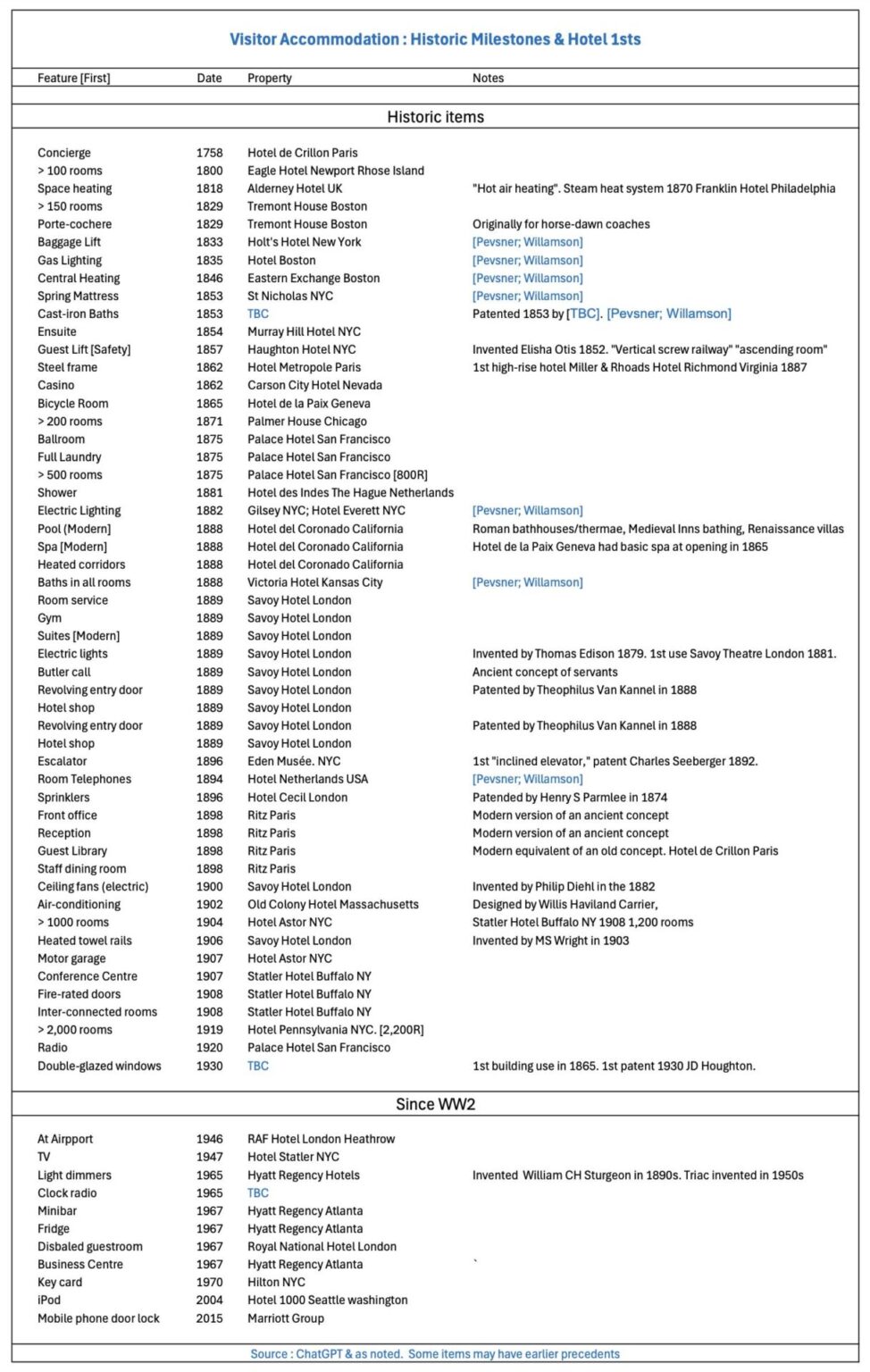
The Industrial Revolution & inventions (primarily by Americans) contributed to many
innovations which greatly enhanced the guest experience & operations of hotels.
Visitor Accommodation Globally after WW2
Some airline companies should foresee the growth of tourism after WW2 and entered the Hotel business
Pan Am built their first InterContinental Hotel (ICH) in Brazil in 1946, but sold ICH in 1981.
With the spectacular growth in car usage in re 1950s , it was inevitable that models would prosper and
by 1970, there were 61,000 motels across the USA alone – a 400% increase on 25 years [Richardson]
The extraordinary expansion of tourism in the 40 years since WW2 had fuelled the growth of “hotels”
such that there were 307,600 “hotels” with 11.33 million rooms in the world by 1995 [Richardson]
equating to an average of approx 37 rooms per Hotel
These statistics had grown to approx 700,000 “hotels” & 16.4 million rooms by 2022 [UNTWO]
equating to average of approx 23 rooms per hotel
This suggests that the average hotel size has reduced by approximately 38% in 25 years
“Hotels” is used in the broader sense to include a range of visitor accommodation types
including hotels, motels, inns, suits, resorts, B&B & guest houses covering luxury,
full-service, limited-service & economy levels [Richardson]
These “hotels” were increasingly grouped under International Hotel “Chains” which managed
multiple brands across many countries, and included very familiar names to any traveler such as
Hilton, Marriott, Accor, Hyatt & InterContinental.
The hotel chains benefitted from standardised brand & operating standards and economies
of scale in marketing, purchasing, reservations, financing & personnel.
There were some 200 Chains by he early 1970s [Richardson] but over the
last 50 years a series of mergers & acquisitions has consolidated
the list to fewer but much larger organisations.
In 1968 the Queen Mary became a hotel & tourist attraction in California (another adaptation)
and after 1968, the Queen Elizabeth liner was temporarily sued as a convention centre &
university before it sank in HK harbour [Richardson] These are examples of how diversified
hotel adaptations have become over the years.
Orient Express was bought by Sea Containers and transformed during the 1980s & 1990s into a
multi-faceted company managing luxury trains including the Eastern Oriental Express (between
Singapre & Bangkok), Orient Express Hótels and a river cruise [Richardson]
The Hotel Rossia Moscow with 3,126 rooms was the largest in the world when it opened
in 1967 [Pevsner] but has since been eclipsed by the First World Hotel
Genting Highlands Malaysia with 7,351 rooms
Other huge casino-based hotels in Las Vegas include –
The Venetian Resort – 7,092 rooms
MGM Grand – 6,852 rooms
Wynn – 4,750 rooms
Caesars Palace – 3,960m rooms
Bellagio Hotel & casino – 3,950 rooms
Huge hotels in the world’s other gambling Mecca Macau include
Galaxy Macau – 3,600 rooms
The Venetian Macau – 3,000 rooms
The Parisian Macau – 3,000 rooms
21st Century
Specialist segment accommodation emerged
during the later 20th C such as –
Conference Hotels
Airport hotels
Business Hotels
Themed Hotels
Women-only Hotels
Backpacker Hostels
Serviced residences
Micro pod hotels
Limited service hotels
Over recent decades, the accommodation industry has dramatically diversified
as travelers expectations & demands have intensified & focused on
Aspirations
Experiences
Uniqueness
Authenticity
Sustainability
Exclusivity
Privacy
Personalized service
The accommodation industry has responded with new products including
Independent operators
More focused brands
Boutique hotels
Design Hotels
Deluxe Hotels
Adaptive Reuse hotels such as Accommodari properties
can perfectly satisfy this new breed of travelers
Authentic character
Stories to tell
Heritage Patina
Unique Personality
Prime locations
Local familiarity = patronage
Sustainability credentials
Case Study : Sydney Australia
Invaluable references for this section are
Paul McGuire : Inns of Australia
J. M. (John Maxwell) Freeland [1]: Architecture in Australia
Freeland [2]: The Australian Pub
Kirkby, Luckins, and McConville [KLM]: The Australian Pub
Richardson : A History of Australian Travel and Tourism
Davidson and Spearritt, Holiday Business
Refer Bibliography for full details
Part 1 : Colonial to 19th Century
Australia’s oldest existing hotel, the Macquarie Arms at Windsor of 1815 was the result of Governor
Lachlan Macquarie’s mandate that selected land grants required an inn. [Freeland]
By 1830, Sydney had 197. The Half-Way House in Ashfield was Australia’s first wayside inn and the first
stage-coaches between Sydney & Parramatta in 1823 changed horses there [McGuire]
The early pubs & Inns were typically about 10 miles apart along main roads from Sydney, as this was a typical
‘wagon-stage” distance [McGuire] The early towns of the Blue Mountains and beyond all developed based on
wayside inns such as Wentworth Falls’ The Weatherboard 1820s, Blackheath’s Gardner’s Inn 1830 and the
Mount Victoria Hotel in 1834 [McGuire] The Surveyor-General Inn Berrima 1835 is a splendid survivor
from the early inns of the southern highlands. [McGuire]
By the 1820s, pubs were being custom designed, with 6 or 8 bedrooms upstairs, dining & parlour rooms
on the lower level, normally in the emerging colonial style, on a corner location or high ground. [Freeland 1]
By the 1840s, pubs & hotels were typically 2 storeys often with 30-40 rooms. [Davidson & Spearritt]
Importantly in 1830, NSW introduced a Licensing Act that mandated all public houses including inns and pubs
to provide accommodation for visitors with a minimum of 2 bedrooms & 2 sitting rooms [KLM]
This requirement was only repealed in 1982 [Hodgson] which had a significant short-term impact on TA in Sydney
Also, from the early 19th C, licensing laws required public houses to provide food – which in pubs & inns was typically
simple, affordable, “home-cooked” meals – and stabling for horses. [KLM]
The Sir Joseph Banks Hotel south of Sydney from 1842 was one of the first grand suburban resort hotels
which featured pleasure gardens, riding-school, menagerie with elephant, bathing house & race course.[McGuire]
The canvas Russell Arms Hotel Granville 1853 was Australia’s first “railway hotel”.[McGuire]
Petty’s Hotel was rebuilt in 1850, having 100 apartments, a large saloon and dancing room catering for
concerts, meetings & fairs. The popularity of Petty’s Hotel necessitated extension in 1904, with a 3rd floor
added in 1850 style but was subsequently converted to the Red Cross HQ prior to its demolition.[Richardson]
The era of hotels which emerged in Sydney during the 1850s, partly as a result of the gold rush, had
the appearance of a commercial building rather than a residence (which was more typical previously)
and offered food and beverage (F&B) and sometimes entertainment as well as facilities for
meetings, dances & concerts in addition to accommodation.
They also separated social classes or the sexes with public bars, saloon bars and parlours. [Richardson]
There were 400 hotels in NSW by 1880, twice as many as 10 years earlier.[Davidson and Spearritt]
A boom of “Coffee Palaces” hit Sydney (& Melbourne) during the 1880s & early 1890s, sponsored by the
alcohol-free temperance movement. Australia suffered during the financial downturn of the 1890s, and
temperance aspirations gave way to financial reality when Coffee Palaces were relicensed
as hotels Richardson] – it was hard to be profitable without a bar in Sydney.
Sydney’s Castlereagh Street between Moore Street (renamed Martin Place) and King St, was known as
“Hotel Row” due its group of grand properties including the Australia Hotel (1891) which was
considered to have the most extravagant interior. Due to increased demand, three extra floors were added
to the Australia Hotel in 1921, and a new wing facing Martin Place was added in 1936, which included
a wintergarden, banquet hall and buffet, three private dining rooms and 6 floors of residential
suites & bedrooms all overlooking Martin Place.
Other properties nearby were the Carlton Hotel, Usher’s Hotel, and the “sumptuous”
Metropole Hotel in Bent Street which opened in 1890.[Richardson]
Part 2 : Sydney : 20th C & beyond
Between the wars, some new hotels were built such as the Hotel Manly Sydney 1924 [Richardson] and many
hotels expanded or renovated such as The Menzies which added 6 floors. The breweries (Tooheys and Tooth & Co)
owned many of the pubs which were remodelled in the “modern-style” such as Art Deco including
the Australian Chippendale & the Hollywood Surry Hills [Davidson and Spearritt] In the 50 years up to the 1930s,
more than half the pub hotels closed due to license reduction policies, commercial pressure and competition. [KLM]
Youth hostels started to flourish following the lead of YHA Victoria in 1939. [Richardson] During the late 1940s Australia’s
motel industry arrived, and by 1959 there were 80 in Australia, and by 1964 there were 675 [Kerr, Foster & Co]
In the modernist period during the 1960s and 1970s, many of the older grand hotels were demolished including the
Arcadia, Adams & Sydney in Pitt St, Ushers in Castlereagh St and Grand Central hotel
in Clarence St.[Davidson and Spearritt]
The loss of these old hotels was partly replaced by new hotels including the Chevron Hotel Potts Point in 1960,
managed by Hilton as Australia’s first international management company [Richardson]
and the Wentworth Hotel built in 1966 by Qantas next to their Sydney HQ.[Davidson and Spearritt]
By the late 1960s, escalating land prices made hotels less competitive amongst other building types [Richardson] especially
with the demand for larger guestrooms which meant fewer guests per sqm of building area.[Davidson and Spearritt]
During the 1970s, the demolition of older hotels continued in Sydney including the Australia Hotel in 1971,
Metropole on Bent St 1972 & Pettys 1975 [Richardson] Consequently, Sydney’s room numbers did not reach
their early 1960s peak until the development boom of the late 1980s, .[Davidson and Spearritt] and Kings Cross
became the epi-centre of hotels in Sydney during this period. The local “budget” accommodation sector
was transformed when Southern Pacific Hotel Corporation (SPHC) took over Travelodge, Lend Lease created
Country Comfort hotels, and Homestead Motor Inns & the Budget Motel Chain were established. [Richardson]
Apart from the Regent in George St (now Four Seasons) which opened in 1983 after 10 years of persuading SCRA
to allow a new building near the historic Rocks following the green bans of the 1970s, [Davidson and Spearritt]
many of the hotels opening were adaptive reuse.
From the late 1980s, a series of “boom & bust” hotel development cycles emerged in Sydney caused by
fluctuating market and economic circumstances, which have continued to varying degrees ever since.
In the late 1980s, tourist accommodation investment attitudes changed from negative (too expensive to build
with long lead-time and volatile profitability due to seasonality, competition & fashion) to positive, due to the
removal of government control, Japanese investment and good growth in visitor numbers. [Richardson]
Sydney witnessed a boom of major new hotels, when the number of 5 star hotels in the city doubled during the
late 1980s & early 1990s with the opening of the Marriott (1989), Park Hyatt (1990), Sir Stamford (1990),
ANA (now Shangri-La 1992) and Sheraton on the Park (1992) [Davidson and Spearritt]
11,000 rooms or 10% were in receiver’s hands with many bought by Asian bargain investors from
hotel returns were improving, and confidence had returned sufficiently to encourage 3 Hotel floats on the
Australian Stock Exchange (ASX) – BT Hotel Group, Grand Hotel Group & Tourism Asset Holdings (based on
the Accor Asia Pacific portfolio) [AE Richardson] During the late 1990s. there was a frenzy of hotels in the lead-up
to the 2000 Sydney Olympics with room supply increasing 50% between 1996 and 2000
This boom led to oversupply and limited new development for almost 20 years, which was exacerbated by Sept 11,
after which tourism plateaued for 3 years, 10 hotels closed in Sydney & 2,000 beds were lost.[KLM]
Apart from the Ibis Budget in Darlinghurst in 2004, and the Ibis King St Wharf in 2008, there was a dearth of
new hotels in Sydney during the 2000s. This was partly offset by 8 new serviced apartment projects during the
mid to late 2000s. Adapted accommodation were also more prominent during this period.
The global financial crisis (GFC) of 2008 also contributed to a “bust” of new hotel development until the mid 2010s,
when a renaissance of positive sentiment towards hotel development and investment re-emerged due to ongoing
strong growth in international & domestic tourist demand & limited TA supply since 2000.
The 2017 opening of the 600 room Sofitel Darling Harbour was Sydney’s first new large hotel for over 15 years.
Like the late 1990s, a majority of the new tourist accommodation “keys” during the late 2010s are in large custom-built